
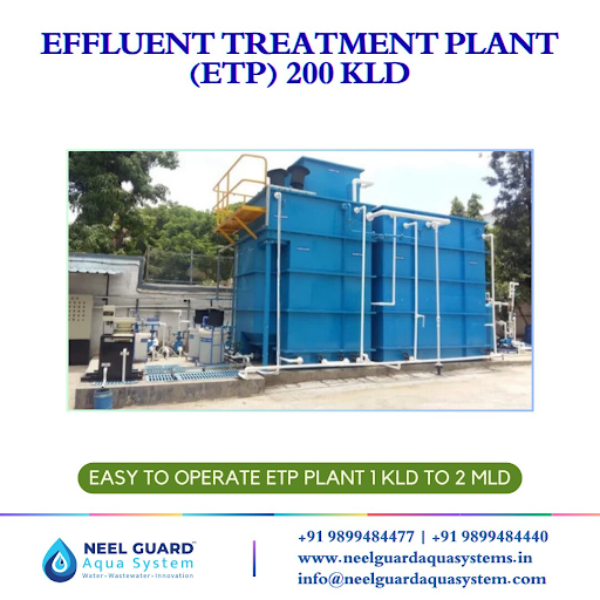
Industrial wastewater can contain chemicals, suspended solids, oils, organic matter, dissolved contaminants, colour, plus other pollutants depending on the manufacturing process. An ETP Plant is designed to treat this wastewater before discharge, reuse, or further processing according to applicable requirements.
For industries operating in Delhi, wastewater management needs to begin with understanding what enters the effluent stream. Wastewater from a pharmaceutical facility will not necessarily have the same characteristics as effluent from textile, food-processing, chemical, or engineering operations.
What Happens Inside an ETP?
An Effluent Treatment Plant usually combines several physical, chemical, plus biological processes.
The treatment sequence can include:
- Screening
- Collection
- Equalization
- pH adjustment
- Coagulation
- Flocculation
- Primary clarification
- Biological treatment
- Secondary clarification
- Filtration
- Sludge handling
- Advanced polishing where required
Not every plant needs every stage. Treatment should be selected after analysing the wastewater characteristics.
Equalization Helps Stabilize Treatment
Industrial effluent rarely enters a treatment plant at exactly the same strength throughout the day.
Production schedules, cleaning cycles, batch processes, plus chemical usage can cause sudden changes in pH, pollutant concentration, or flow.
An equalization tank helps collect wastewater so that these variations can be moderated before downstream treatment. More consistent wastewater characteristics can make subsequent treatment easier to control.
Chemical Treatment Targets Specific Contaminants
Some pollutants cannot be adequately removed by simple settling.
Coagulants, flocculants, pH correction chemicals, plus other treatment chemicals may be used to destabilize suspended matter or create conditions suitable for pollutant removal.
Chemical selection should be based on testing rather than assumptions because overdosing can increase operating costs plus sludge generation.
Biological Treatment Handles Biodegradable Pollution
Wastewater containing biodegradable organic matter may require biological treatment.
Microorganisms consume organic contaminants under controlled conditions. The effectiveness of this stage depends on parameters such as oxygen availability, nutrient balance, pH, temperature, pollutant loading, plus retention time.
Sudden toxic loads can disturb biological activity. This makes source control within the factory important.
Sludge Cannot Be Ignored
ETP operation creates sludge that needs appropriate handling.
Sludge may be thickened, dewatered, stored, plus managed according to its characteristics plus applicable disposal requirements. Poor sludge management can create odour, housekeeping, storage, plus compliance problems even when the liquid treatment process is functioning.
Facility teams should therefore evaluate sludge production during the design stage.
Treatment Starts Inside the Production Facility
One of the most useful wastewater-management practices is preventing unnecessary contamination before wastewater reaches the ETP.
Factories can examine whether concentrated chemical streams should be segregated, whether excessive water is being used for washing, whether leaks are increasing hydraulic load, plus whether reusable streams can be separated.
NEEL GUARD AQUA SYSTEMS works with industrial wastewater projects requiring treatment configurations based on wastewater characteristics, capacity, plus site conditions.
For industrial facilities in Delhi, an ETP Plant should be viewed as part of the overall manufacturing utility system rather than a standalone disposal arrangement.
Consistent operation depends on understanding the effluent source, controlling variable loads, selecting suitable treatment stages, monitoring plant performance, plus managing sludge responsibly. When these elements are considered together, wastewater treatment becomes far easier to operate reliably.