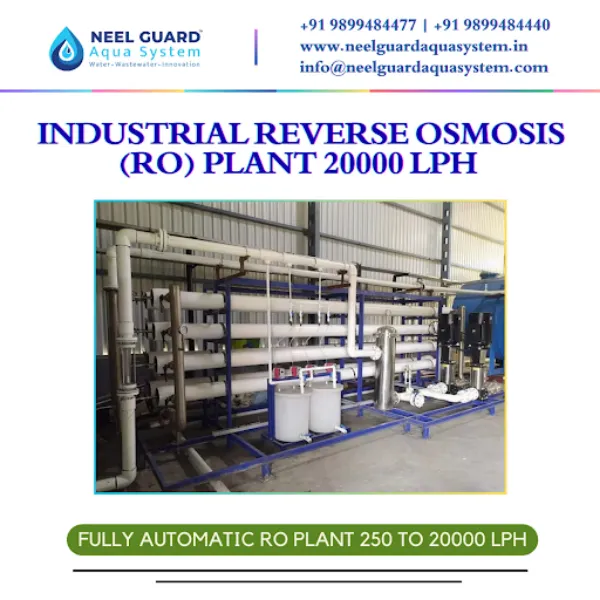
When industrial water consumption reaches large volumes, RO plant selection becomes a significant infrastructure decision. A poorly planned system can affect water availability, operating expenditure, maintenance workload, and downstream production.
An Industrial RO Plant 20000 LPH is designed for high-volume applications requiring nominal treated-water production of approximately 20,000 litres per hour under specified design conditions.
For large facilities in Delhi, the procurement process should begin well before equipment specifications are finalised.
When 20000 LPH Capacity Makes Sense
A large RO plant may be relevant where manufacturing processes, utilities, institutional operations, processing lines, or other industrial applications require substantial quantities of treated water.
Capacity should be established through a water-demand assessment.
Calculate:
- Average hourly demand
- Peak demand
- Total daily requirement
- Number of operating hours
- Storage capacity
- Future expansion
- Critical production requirements
These figures help determine whether 20000 LPH is appropriate.
Assess Raw-Water Availability
A 20000 LPH RO system requires more than 20,000 litres of feed water per hour because part of the feed becomes the reject stream.
Expected recovery depends on feed-water chemistry and system design.
Facilities should therefore verify whether the available water source can consistently support the required feed rate.
Look Beyond the RO Membranes
Large RO projects should be evaluated as complete treatment systems.
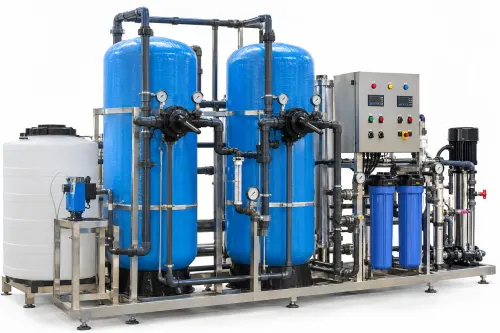
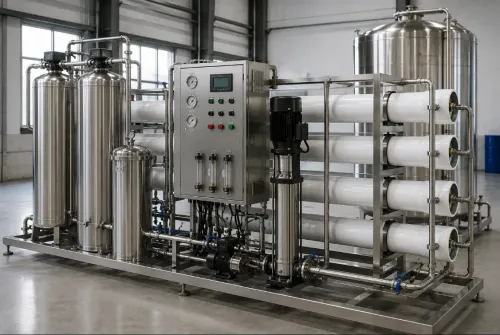
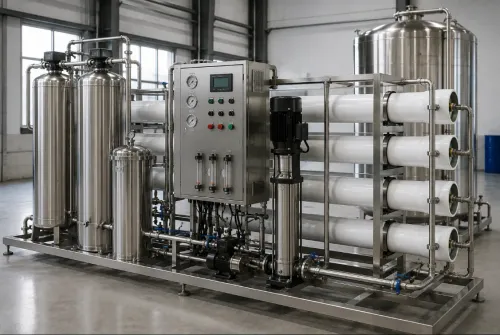
Important elements can include pretreatment, feed pumps, high-pressure pumps, membrane housings, instrumentation, dosing equipment, control systems, treated-water storage, cleaning arrangements, and reject management.
The configuration depends on raw-water characteristics and required output.
Provider Readiness Indicators
When selecting a manufacturer for a high-capacity system, industrial buyers should look for a structured technical approach.
Useful indicators include:
- Requesting detailed raw-water analysis
- Calculating water demand and recovery
- Explaining the proposed pretreatment
- Providing clear equipment specifications
- Considering maintenance accessibility
- Discussing instrumentation and controls
- Reviewing reject-water generation
- Accounting for site-specific installation conditions
A provider recommending a large RO system without first understanding these variables may be overlooking important design considerations.
Planning for Delhi Operating Conditions
Local conditions such as source-water characteristics, ambient temperature, available utility space, operating schedules, and industrial infrastructure should be considered during project planning.
Neel Guard Aqua System manufactures industrial RO and wastewater treatment systems for different capacity requirements. For a high-volume project, the company can assess water analysis, process demand, site requirements, and expected operating conditions before defining the equipment configuration.
Businesses planning an Industrial RO Plant 20000 LPH in Delhi should treat the project as a complete water-management decision rather than a simple equipment purchase. A detailed technical assessment at the beginning can support more reliable capacity selection, practical operation, and future scalability.
Keywords