
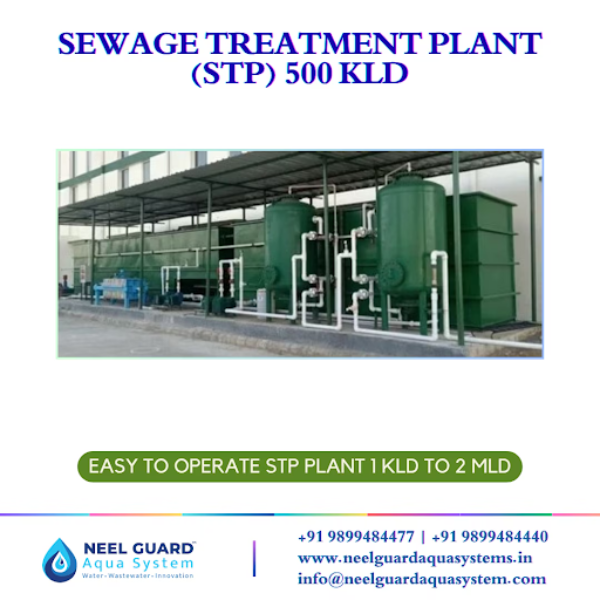
A STP Plant treats sewage generated from toilets, washrooms, kitchens, residential facilities, commercial buildings, institutions, plus other occupied premises. Its purpose is to reduce contaminants in sewage so that treated water can be managed or reused according to applicable requirements.
In Delhi, sewage treatment is particularly relevant for residential developments, commercial complexes, institutions, hospitality properties, plus large facilities that generate substantial wastewater every day.
Understanding the basic treatment process helps property managers make better decisions about operation, maintenance, reuse, plus capacity planning.
Sewage Contains Several Types of Contamination
Domestic sewage is mostly water, but the remaining contaminants are important.
It may contain:
- Organic matter
- Suspended solids
- Nutrients
- Detergents
- Oils plus grease
- Pathogenic microorganisms
- Food residues
- Fine particles
Treatment must reduce these contaminants through a planned sequence rather than relying on simple filtration.
Preliminary Treatment Protects Equipment
Screens are often used at the beginning of the treatment process to capture larger materials.
Removing plastics, cloth, sanitary waste, plus other debris protects pumps plus downstream equipment from blockage.
Grease management may also be important where kitchen wastewater enters the system.
Good housekeeping at this stage can prevent avoidable maintenance problems.
Biological Treatment Performs the Core Work
Many STPs rely heavily on biological processes.
Microorganisms break down biodegradable organic matter under controlled conditions. Depending on plant design, treatment technologies may include activated sludge systems, moving bed biofilm reactors, membrane bioreactors, sequential batch reactors, plus other configurations.
Technology selection depends on factors such as available space, sewage volume, desired treated-water quality, operating skills, capital budget, plus reuse requirements.
Clarification Separates Solids
After biological treatment, suspended biological solids generally need to be separated from the treated liquid.
Clarification or membrane separation may perform this function depending on the selected process.
Further filtration plus disinfection can then improve treated-water quality before storage or suitable reuse.
Treated Sewage Can Become a Resource
Where permitted plus technically suitable, treated sewage may be reused for applications such as landscaping, flushing, cooling-related requirements, or other non-potable purposes.
Reuse can reduce demand for freshwater, which may be valuable for large properties in Delhi NCR with significant daily water consumption.
However, reuse planning should be included in the original design. The required final water quality depends on the intended application.
Actual Occupancy Affects Plant Performance
An STP should not be sized only from building area.
Designers need to understand actual or expected occupancy, daily sewage generation, peak flow, operating pattern, plus future changes.
A residential development may have relatively continuous sewage generation. A commercial property may experience stronger daytime peaks. An institution can have very different patterns during holidays or low-occupancy periods.
These variations influence hydraulic loading plus biological stability.
NEEL GUARD AQUA SYSTEMS supports sewage-treatment requirements for residential, commercial, industrial, plus institutional projects.
For facility managers, a dependable STP Plant requires more than selecting a treatment technology. Correct capacity, wastewater characteristics, operator accessibility, sludge handling, aeration efficiency, treated-water storage, plus reuse planning all need attention.
When these elements are considered during project planning, sewage treatment can become a manageable utility function rather than a recurring operational problem.