
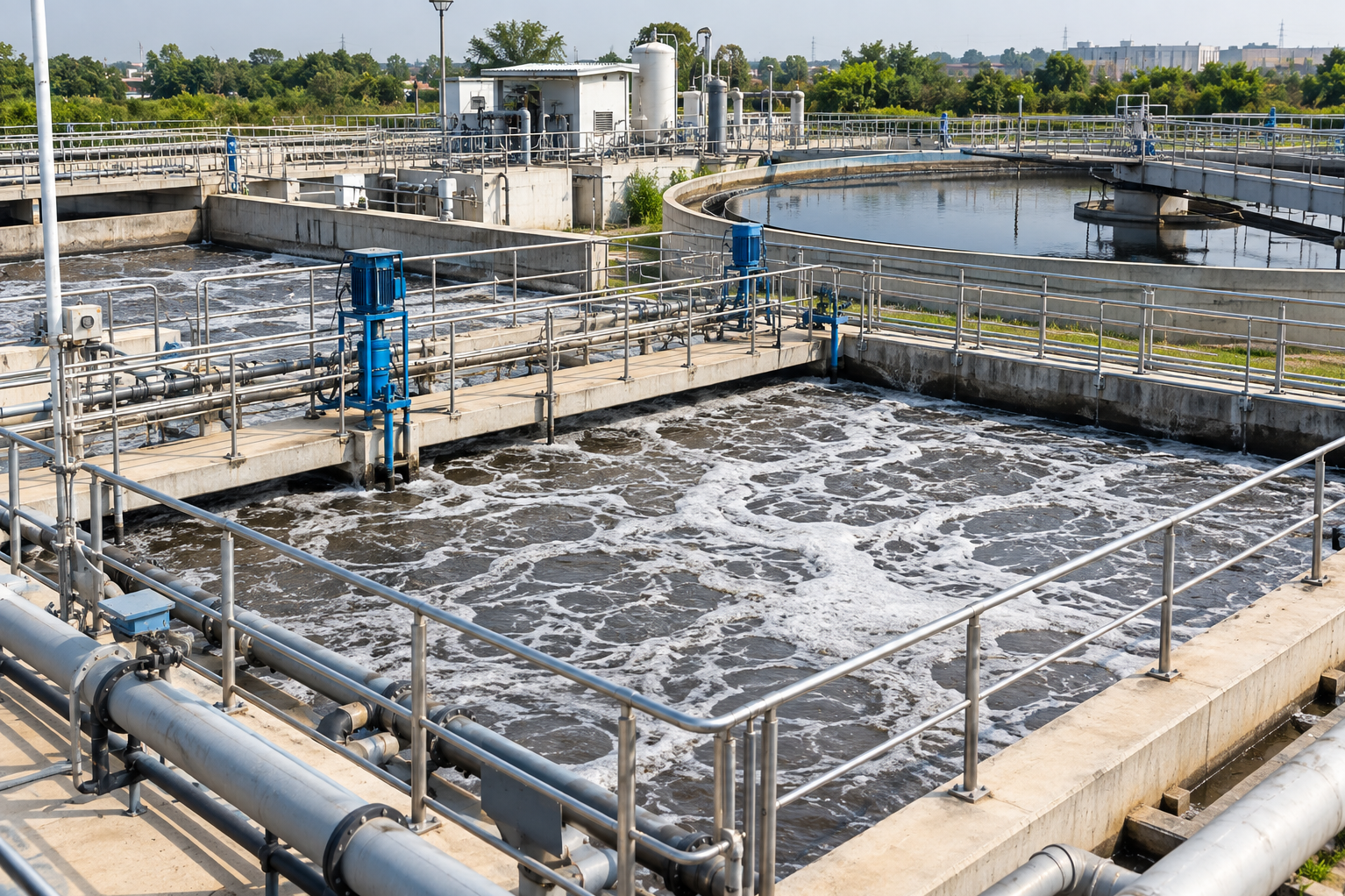
A Wastewater Treatment Plant can consume more electricity, chemicals, operator time, plus maintenance resources than necessary when basic operating problems remain unresolved. Many facilities respond by adding more chemicals or replacing equipment, even though the underlying issue may be inconsistent loading, poor monitoring, unsuitable operating practices, or neglected maintenance.
For industrial facilities in Delhi, identifying these problems early can improve treatment stability plus help control lifecycle costs.
Excessive Hydraulic Load
Every treatment system has a designed flow capacity.
When wastewater entering the plant exceeds that capacity, retention time decreases. Settling may become less effective, biological treatment can become unstable, plus downstream filtration may experience higher loading.
Unexpected hydraulic loads can result from:
- Leaking water lines
- Excessive washdown
- Stormwater entry
- Increased production
- Unplanned process discharges
- Incorrect flow measurement
Measuring actual wastewater generation is therefore essential.
Chemical Overdosing
Adding more treatment chemical does not automatically improve treatment.
Excessive coagulant, flocculant, neutralizing chemical, or disinfectant can increase operating expenses plus create secondary problems.
Overdosing may also increase sludge volume.
Jar testing, controlled dosing, plus regular parameter monitoring can help facilities adjust chemical consumption according to actual wastewater conditions.
Poor Aeration Efficiency
Biological treatment can account for a significant share of wastewater-treatment energy use because aeration equipment may operate for long periods.
Blocked diffusers, unsuitable blower operation, air leakage, plus uncontrolled dissolved oxygen can reduce efficiency.
Operators should examine whether aeration is delivering the oxygen required by the biological process without unnecessary energy consumption.
Ignoring Sludge Accumulation
Sludge handling is sometimes treated as a secondary task until tanks lose effective volume or solids begin affecting downstream treatment.
Excess sludge can interfere with clarification plus contribute to poor treated-water quality.
A clear sludge withdrawal, dewatering, storage, plus disposal routine should be part of normal plant operation.
Treating Every Waste Stream Together
Industrial wastewater can contain streams with very different characteristics.
A highly concentrated chemical stream may create a shock load when mixed directly with normal wastewater. Oil-rich wastewater, high-TDS streams, acidic waste, alkaline waste, plus biodegradable wastewater may require different handling strategies.
Source segregation can sometimes make treatment more predictable.
Reactive Maintenance
Waiting for pumps, blowers, dosing systems, or filters to fail often creates expensive emergency maintenance.
Preventive inspection should cover rotating equipment, electrical panels, pipelines, valves, diffusers, dosing pumps, sensors, filters, plus safety systems.
Maintenance records also help identify equipment that repeatedly causes downtime.
Missing Operational Data
Without records, treatment performance becomes difficult to diagnose.
Operators should track relevant parameters such as:
- Daily flow
- pH
- Chemical consumption
- Energy consumption
- Dissolved oxygen where applicable
- Sludge generation
- Treated-water quality
- Equipment downtime
Trends can reveal gradual deterioration before a serious problem develops.
NEEL GUARD AQUA SYSTEMS works with industrial water plus wastewater projects where system design must account for flow, pollutant characteristics, site conditions, plus treatment objectives.
For Delhi facilities seeking to reduce wastewater-treatment costs, the first step should not automatically be equipment replacement.
Review hydraulic loading, chemical dosing, aeration, sludge management, maintenance records, plus process data first. Correcting operational inefficiencies can often improve plant performance while providing clearer information about where equipment upgrades are genuinely necessary.