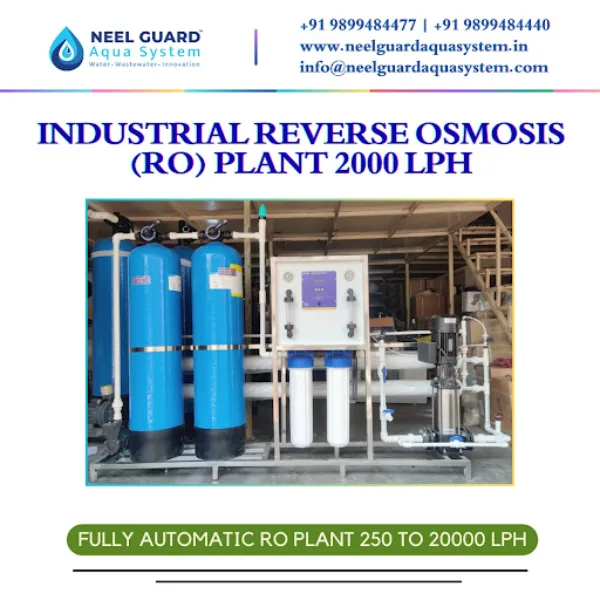
An Industrial RO Plant is commonly used when a facility needs to reduce dissolved salts, hardness-related contaminants, plus other impurities from incoming water. Reverse osmosis can support manufacturing processes, utility systems, commercial facilities, institutional projects, plus applications requiring controlled water quality.
For facility managers in Delhi, understanding how RO works is useful because plant performance depends on much more than installing a membrane system.
How Industrial Reverse Osmosis Works
Reverse osmosis uses pressure to move water through a semi-permeable membrane. The membrane allows a significant proportion of water molecules to pass while rejecting many dissolved contaminants.
The system generally produces two streams:
- Permeate, which is the treated water
- Reject or concentrate, which carries a higher concentration of rejected salts
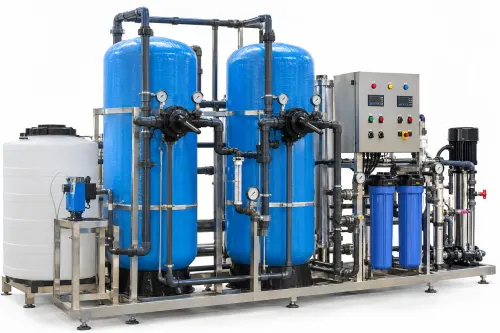
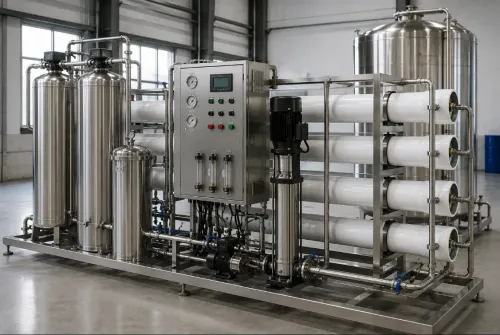
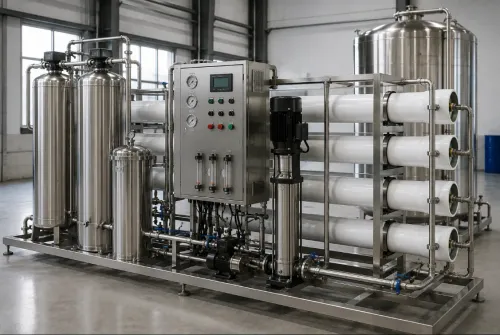
An industrial system usually includes more than RO membranes. Pretreatment is often essential for protecting the membrane surface.
A typical arrangement may include raw-water storage, filtration, chemical dosing, micron filtration, high-pressure pumping, RO membranes, instrumentation, plus treated-water storage.
Why Pretreatment Is Important
RO membranes are sensitive to scaling, suspended particles, oxidants, plus certain contaminants. Poor pretreatment can shorten membrane life or reduce output.
If raw water contains high hardness, a softener or suitable antiscalant strategy may be considered. Suspended matter may require filtration. Chlorine management can also be important depending on membrane chemistry.
This is why feed-water analysis should come before equipment selection.
Recovery Rate Deserves Attention
Recovery refers to the proportion of feed water converted into usable permeate.
A higher recovery rate may appear attractive because less reject water is produced. However, increasing recovery without considering feed-water chemistry can increase the concentration of salts within the system, raising scaling risk.
The appropriate recovery rate depends on:
- Feed-water TDS
- Hardness
- Silica
- Temperature
- Membrane configuration
- Pretreatment quality
- Required permeate quality
Plant design should balance water recovery with reliable membrane operation.
Pressure Gives Useful Operational Information
Pressure readings can reveal a great deal about RO performance.
An increasing pressure differential may indicate membrane fouling. Changes in feed pressure, permeate flow, or reject flow can also signal operational issues.
Operators should record key readings rather than relying only on whether treated water is still being produced.
Useful records can include:
- Feed pressure
- Membrane-stage pressure
- Permeate flow
- Reject flow
- Conductivity
- Feed-water temperature
- Chemical dosing
Trend monitoring makes gradual performance deterioration easier to identify.
Where Industrial RO Systems Are Used
Delhi-based manufacturing facilities may use RO-treated water for process preparation, rinsing, boilers, cooling systems, laboratories, product manufacturing, plus general utility applications.
Pharmaceutical, chemical, food-processing, textile, engineering, hospitality, institutional, plus commercial facilities may have very different quality requirements. Consequently, membrane selection plus system configuration should match the application.
NEEL GUARD AQUA SYSTEMS provides industrial water treatment solutions for projects requiring RO plus associated pretreatment systems.
A well-performing Industrial RO Plant is not simply a membrane skid. Feed-water chemistry, pretreatment, membrane selection, operating pressure, recovery, instrumentation, plus routine maintenance all influence long-term performance.
Understanding these fundamentals helps facility teams evaluate an RO system based on actual operating requirements rather than capacity alone.
Keywords