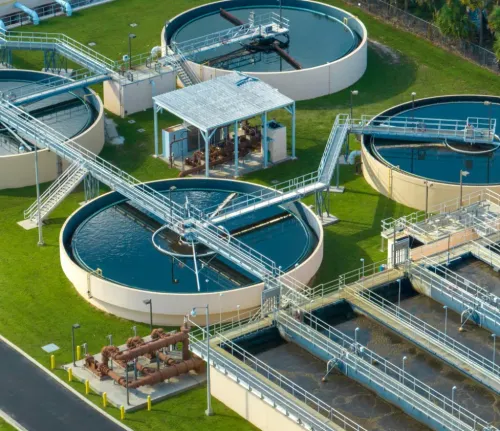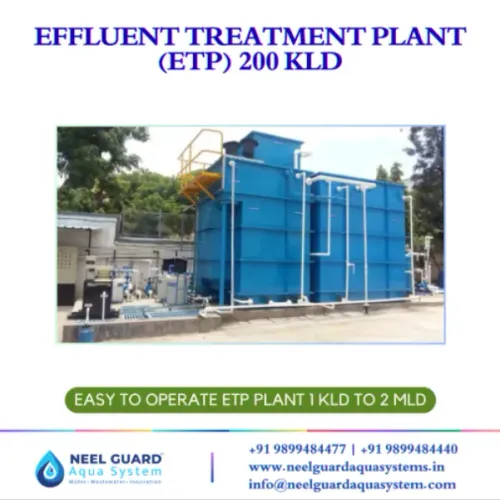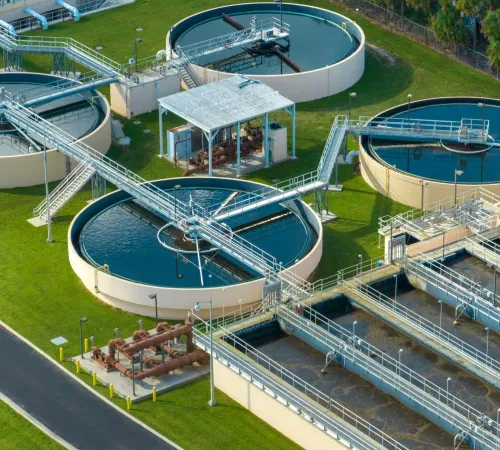

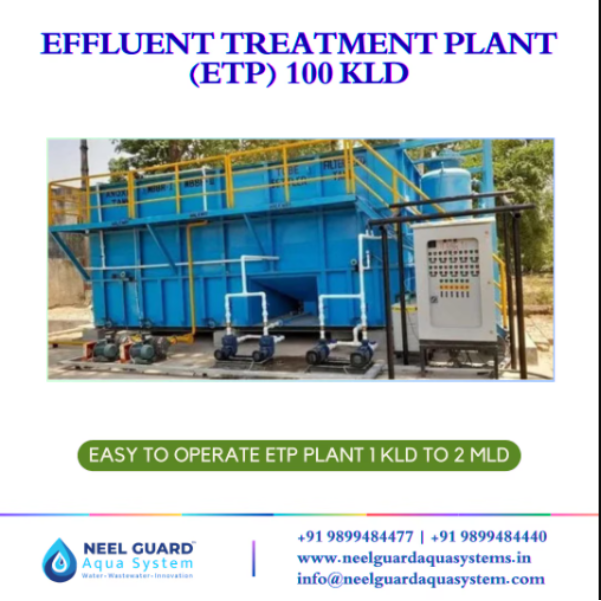
An industrial facility generating around 100 kilolitres of wastewater daily needs a treatment system that can consistently manage the expected hydraulic and pollutant load. An Effluent Treatment Plant 100 KLD provides a structured treatment arrangement for industrial wastewater before suitable discharge, reuse, or additional treatment.
For businesses operating across Delhi and surrounding industrial areas, ETP planning should begin with the source of wastewater. Two facilities producing the same volume of effluent can require very different treatment processes because their wastewater composition may not be comparable.
Neel Guard Aqua System manufactures industrial water treatment and effluent management systems for different industrial requirements. A 100 KLD configuration can incorporate multiple treatment stages depending on wastewater analysis.
How a 100 KLD ETP Typically Works
Industrial wastewater normally passes through several treatment stages. The exact sequence depends on the contaminants that need to be removed.
Preliminary treatment can remove larger solids and materials that may interfere with subsequent equipment. Equalisation helps balance variations in wastewater flow and characteristics.
Chemical treatment may then be used where neutralisation, coagulation, flocculation, or contaminant separation is required. Biological treatment can address biodegradable organic matter in suitable wastewater streams.
Clarification and filtration help remove remaining suspended material before treated water reaches its designated outlet or further polishing stage.
Where 100 KLD Capacity Can Be Relevant
A 100 KLD ETP may be considered for:
- Medium to large manufacturing facilities
- Food and beverage processing units
- Engineering operations
- Commercial complexes
- Institutional facilities
- Industrial processing units
- Facilities with reusable process-water objectives
Capacity should always be confirmed through actual wastewater generation data.
Important Factors Before System Selection
A common mistake is treating “100 KLD” as a complete plant specification. It only describes the nominal treatment capacity.
Buyers should also evaluate the following:
Wastewater characteristics: Different contaminants require different treatment technologies.
Peak flow: Wastewater may not enter the ETP evenly throughout the day.
Operating schedule: An eight-hour production shift creates different hydraulic conditions from continuous operation.
Outlet requirement: The required treated-water quality influences the treatment stages.
Available footprint: Equipment arrangement should suit the available site.
Sludge handling: Treatment can generate sludge that needs appropriate collection and management.
Improving Long-Term Plant Operation
An ETP should also be practical to operate after installation. Access to pumps, tanks, dosing equipment, blowers, filters, instrumentation, and maintenance points needs to be considered during planning.
Operators should understand routine inspection requirements and maintain appropriate operating records. Preventive maintenance can help identify problems before they develop into prolonged downtime.
For industries exploring an Effluent Treatment Plant 100 KLD in Delhi, the selection process should combine capacity calculations with wastewater analysis and site assessment. Neel Guard Aqua System can help industries evaluate these requirements and configure a treatment system around actual operating conditions.