A 10,000 LPH rating is incomplete until you know whether it describes permeate, feed flow or hydraulic throughput, and which temperature, recovery and feed-water conditions support the figure. By the end, you will be able to calculate the actual water demand, assess pretreatment and reject handling, compare membrane and control specifications, and write a purchase brief that protects continuous operation.
Key takeaways
- Confirm whether 10,000 LPH means permeate, feed flow, or hydraulic throughput.
- Base pretreatment on feed-water analysis, not the target production rate alone.
- Specify recovery, membrane staging, temperature, water quality and operating hours.
- Require reject handling, control functions, maintenance access and acceptance tests in writing.
What Does 10,000 LPH Actually Measure?
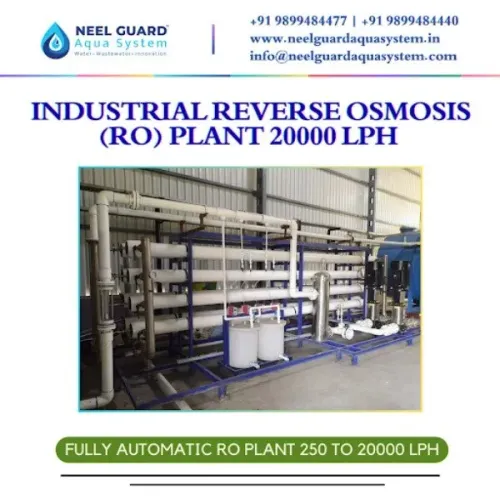
“10,000 LPH” is meaningful only when you know whether it describes permeate flow, feed-water flow rate, or nominal hydraulic throughput. An industrial RO plant 10000 LPH rated for permeate production delivers 10,000 litres per hour of treated water; a unit rated for feed flow does not.
Ask the supplier to state these capacity conditions:
- Reference feed temperature
- Feed TDS or conductivity
- Recovery percentage
- Guaranteed permeate quality, including conductivity or permitted salt passage
At 75% recovery, producing 10,000 litres per hour of permeate requires about 13,333 litres per hour of feed and generates approximately 3,333 litres per hour of concentrate. A quotation that calls 10,000 LPH RO plant capacity the feed rate describes a different, smaller permeate duty.
Temperature, pressure, fouling and membrane age change actual production. A rating at 25°C is not a promise of the same output from cold water; thin-film composite membranes can change normalized permeate flow by roughly 2–3% per °C.
Also separate gross nameplate capacity from delivered daily-average capacity. Cleaning, cartridge-filter changes, calibration, maintenance and unplanned downtime reduce available output. If your process needs 10,000 litres every operating hour, request the expected daily production, cleaning schedule and maintenance assumptions—not only the skid’s peak hourly figure.
Design Pretreatment from the Feed-Water Analysis
An SDI15 below 5 is a common membrane-feed target, but difficult water may require a lower value. Design the RO pretreatment system from laboratory results, not from a 10,000 LPH nameplate.
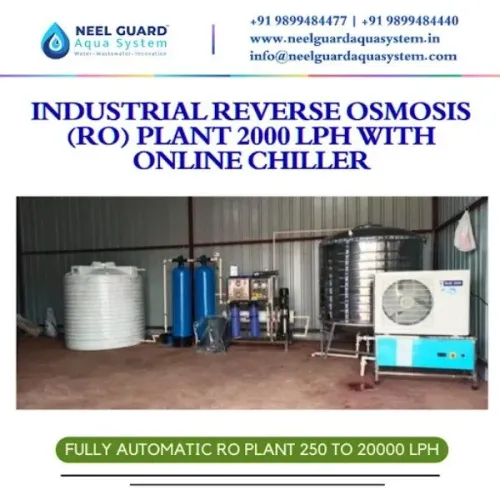
Provide a raw-water tank sized for source variability and backwash demand, followed by a feed pump matched to the multimedia filter, cartridge filter and membrane pressure requirement. Turbidity, suspended solids, iron and manganese determine multimedia filtration; oil requires a separate removal step because it can foul membranes and carbon beds.
| Feed-water result | Equipment or control | Why it matters |
|---|---|---|
| Turbidity, SDI15, iron, manganese | Multimedia filter | Reduces particulate fouling; verify SDI15 before RO |
| Chlorine | Activated carbon filter or sodium metabisulfite dosing | Protects polyamide membranes; control bisulfite with ORP or residual-chlorine testing |
| Hardness, alkalinity, pH | Softener or antiscalant dosing system | Controls calcium carbonate risk |
| Silica, sulfate, hardness | Antiscalant dosing and recovery review | Checks calcium, barium and strontium sulfate and silica scaling |
| Microbiological activity | Disinfection, tank hygiene and biological monitoring | Limits biofouling |
| Final suspended particles | Cartridge filter | Protects the membrane vessels |
Place coagulant or oxidant dosing before filtration when the analysis supports it, and place antiscalant dosing after pretreatment at a controlled injection point. Antiscalant does not make unlimited recovery safe: calcium carbonate, calcium sulfate, barium sulfate, strontium sulfate and silica still require separate scaling projections.
Match Membrane Staging to Output, Temperature and Water Quality
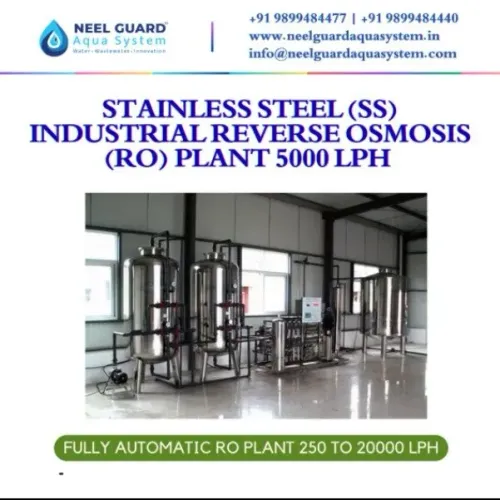
A 10 m³/h permeate duty is usually built from multiple 8-inch thin-film composite membrane elements in staged pressure-vessel arrays, not one undivided vessel. RO membrane staging distributes feed flow, limits element loading and improves concentrate utilisation; a two-stage layout can recover more water without forcing every element to handle the same concentration.
The final vessel count, element count and interstage flow must come from a membrane projection using the actual feed chemistry, recovery and RO operating pressure. Size the high-pressure pump for the required feed flow, pressure, temperature and pressure losses across filters, vessels and pipework; motor horsepower alone does not prove 10,000 LPH delivery.
Temperature changes the promise. Normalized permeate flow can change by roughly 2–3% per °C, so 10,000 LPH at 25°C cannot be treated as 10,000 LPH from cold feed water. The design must state its reference temperature and either increase membrane area or adjust pressure for the coldest expected condition.
A permeate conductivity guarantee is meaningful only with its test envelope:
- Feed conductivity and temperature
- Feed pH and recovery
- Applied pressure and flow
- Membrane age and conditioning
- Measurement location, instrument and temperature compensation
Weakly rejected species such as dissolved carbon dioxide can also raise permeate conductivity, even when headline salt rejection appears satisfactory.
Build Continuous Operation Around Rejects, Controls and Maintenance
At 75% recovery, a 10 m³/h permeate plant produces about 3.33 m³/h of concentrate continuously. RO reject-water management therefore needs a drain, reuse route, evaporation system or permitted disposal plan. A storage tank only delays the discharge problem. Design parallel trains, standby feed pumps and isolation valves if production must continue during cleaning or maintenance.
- Specify an RO control panel with flow meters, pressure gauges, feed and permeate conductivity meters, temperature measurement, level switches, automatic valves, interlocks and high-pressure protection.
- Trend normalized permeate flow, normalized salt passage, feed, interstage and concentrate pressure, conductivity, temperature and pretreatment residuals.
- Configure a high-permeate-conductivity alarm to divert product or stop transfer to the clean-water tank; an unacknowledged panel alarm is not adequate.
| Comparison | Specify | Consequence of omission |
|---|---|---|
| RO energy consumption | Compare kWh per cubic metre of permeate at stated recovery and feed pressure, not motor horsepower alone | A low-power rating can hide poor specific efficiency |
| CIP system for the RO plant | State tank volume, circulation flow, membrane-specific pH and temperature limits, chemical compatibility and cleaning triggers | “Automatic CIP” provides no usable cleaning design |
| Reject outlet | Size the continuous route for 3.33 m³/h, with permits where required | The tank fills while the plant is still producing water |
Ask for cartridge-change, calibration and cleaning intervals in the operating plan; “continuous” describes production, not maintenance-free operation.
Turn the Duty into a Verifiable Purchase Specification
Do not compare quotations until each supplier has completed the same 10,000 LPH industrial RO plant specification. Capacity without test conditions is not a purchase basis.
1. Require a feed-water envelope stating TDS, conductivity, temperature, pH, hardness, silica, iron, manganese, oil, turbidity, SDI15, chlorine and microbiological results. State the design limits, not only one laboratory sample.
2. Require a RO plant performance guarantee for permeate flow and RO permeate quality at stated feed conditions, recovery, concentrate flow and temperature. The offer must name the membrane make and model, pressure-vessel arrangement, high-pressure pump duty, electrical load, instruments, and wetted materials.
3. Require the cleaning procedure: CIP tank volume, circulation flow, chemicals, concentration limits, cleaning triggers and disposal method. List warranty exclusions for fouling, scaling, freezing, chemical attack, poor pretreatment and operation outside the feed envelope.
4. Specify factory or site performance testing, including stabilisation time, flow, conductivity, recovery, pressure, temperature and the method for recording results. Reject guarantees that say “high purity” without acceptance values.
Define the destination before approving the skid. Boiler, cooling-tower, process, rinsing and product-formulation water each impose different limits; RO alone may not meet them. Potable service may need post-disinfection, hygienic storage and controlled distribution, while high-purity water may need degassing, EDI or ion exchange.
An industrial water treatment supplier such as NEEL GUARD AQUA SYSTEMS adds value when it converts these data into a documented, testable design rather than quoting capacity alone.
Related product
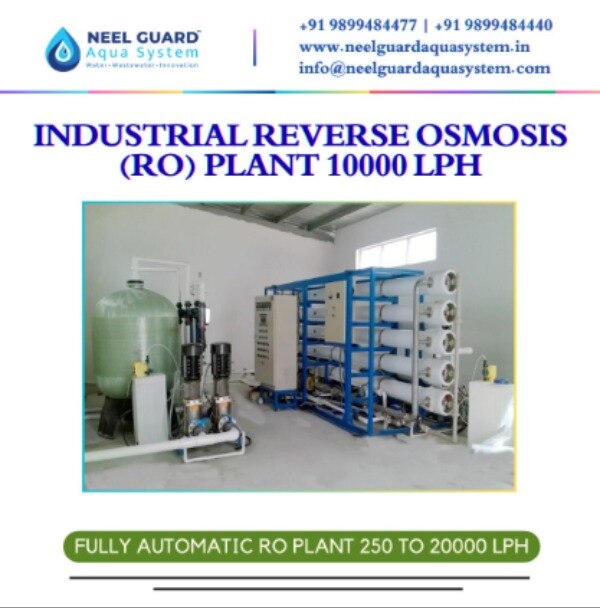
 | REVERSE OSMOSIS (RO) PLANTS ₹8250000 Neel Guard Aqua Systems proudly introduces a high-capacity 10,000 LPH Industrial Reverse Osmosis (RO) Plant, engineered for large-scale industrial... View product → |
Frequently asked questions
What does 10,000 LPH mean in an industrial RO plant?
It can mean permeate flow, feed-water flow or nominal hydraulic throughput. A plant rated at 10,000 LPH permeate produces 10,000 litres per hour of treated water; a feed-flow rating does not.
How do you choose pretreatment for a 10,000 LPH RO plant?
Use feed-water analysis to select equipment and settings. Review turbidity, suspended solids, hardness, iron, manganese, silica, alkalinity, pH, conductivity, temperature and microbiological conditions before choosing filtration, softening, dosing or other pretreatment.
What should the RO design specify besides 10,000 LPH output?
Specify permeate flow at a stated temperature, feed-water quality, recovery, membrane staging, operating pressure, permeate quality, reject flow, operating hours and the conditions used for acceptance testing.
How should continuous operation be planned for an industrial RO plant?
Define reject disposal or reuse, automatic controls, alarms, shutdown interlocks, chemical cleaning access, cartridge-filter replacement, membrane inspection and planned maintenance intervals before purchase.