A plant’s nameplate capacity does not tell you how much permeate it will produce at your site, and a single water test cannot expose every fouling or scaling risk. By the end, you will be able to convert your demand into firm capacity, specify pretreatment and membrane design criteria, compare alternative treatment trains, and test whether reject handling and operation are viable.
Key takeaways
- Size firm capacity from maximum hourly and shift demand.
- Test feed water before selecting filters, softeners or chemical dosing.
- Require membrane projections showing recovery, temperature and permeate quality.
- Match the treatment train to your final water specification.
Calculate firm capacity from your real production schedule
Begin with an hourly demand calculation, not the equipment catalogue. Record process consumption, washing, boiler makeup, cooling makeup, laboratory use and planned expansion, then separate average demand from maximum hourly demand and maximum shift demand. Add operating hours, batch timing and available storage.
| Operating case | What to calculate | Why it matters |
|---|---|---|
| Average load | Typical hourly demand and operating hours | Sets normal running conditions |
| Peak load | Highest hourly and shift demand | Prevents shortages during production surges |
| Largest-train-out | Demand with the biggest train unavailable | Defines firm industrial RO plant capacity |
A 500 LPH or 5,000 LPH nameplate is a nominal rating, not guaranteed site supply. Actual permeate output changes with feed temperature, TDS, pressure, recovery and membrane condition. Specify usable permeate flow at the minimum design temperature, with the reference temperature and correction method stated.
Size storage for start-up, short interruptions and non-operating hours. Multiple independently isolatable trains cost more in valves and controls, but permit cleaning or membrane replacement without stopping supply.
Check turndown, minimum flow, start-stop frequency, automatic flushing and preservation during feed interruptions. A plant sized for a full-load day can become biologically unstable when production runs one shift or in batches. Ask for a hydraulic profile showing feed, permeate and reject flows plus storage levels at average load, peak load and largest-train-out conditions.
Test the feed water before choosing pretreatment
Obtain a laboratory feed water analysis before selecting industrial RO pretreatment. Test TDS and conductivity, pH, temperature, turbidity, hardness, alkalinity, silica, iron, manganese, chloride, sulphate, oil and grease, COD, microbial load and oxidant residual.
Add SDI15, especially for spiral-wound membranes. An SDI15 below 5 is a common design objective, not proof that fouling will be absent. One grab sample is inadequate: test borewell or municipal water across seasons and production campaigns, including cooling-tower blowdown, cleaning discharges and other shock loads.
Equalization or diversion can protect the RO better than sizing it around an average result. Match each unit to the contaminant mechanism:
| Treatment | Primary purpose | Important limitation |
|---|---|---|
| Raw-water tank | Flow balancing | Does not remove contaminants |
| Chemical dosing | Coagulation, pH adjustment or antiscalant | Incorrect dosing creates new operating problems |
| Multimedia filter | Suspended solids reduction | Does not solve dissolved silica, hardness or dissolved contamination |
| Activated carbon filter | Selected organics and oxidants | Can become a biological growth site |
| Iron-removal treatment | Dissolved iron and manganese | Requires chemistry suited to the feed |
| Softener | Calcium and magnesium reduction | Does not remove sulphate or silica |
| Cartridge filter | Final particulate barrier | Specify micron rating and replacement differential pressure |
Remove chlorine, chlorine dioxide and ozone before polyamide membranes, then verify dechlorination at a free-chlorine test point. Control sodium bisulfite dosing because excess chemical increases biological risk. Specify the cartridge rating, replacement differential pressure and residual-testing location in the proposal.
Demand a membrane projection that explains recovery and temperature
Approve the RO recovery percentage only after reviewing a membrane-projection report, not a catalogue flow rate. The report must document the RO membrane selection, membrane type, number of elements and vessels, design membrane flux, operating pressure, salt rejection, reference temperature and temperature correction method.
Require the supplier to show:
- Minimum and maximum feed temperatures, corrected permeate flow and pressure at both conditions.
- Confirmation that the warm-water case remains within the membrane manufacturer’s temperature limits.
- Permeate quality and concentrate chemistry at the proposed recovery, including antiscalant assumptions, pH, concentration factors and reject conditions.
- The impact of calcium carbonate, calcium sulphate, barium and strontium sulphate, silica, iron, aluminium and organic fouling.
| Flux choice | Design consequence | Suitable decision |
|---|---|---|
| Lower membrane flux | More membrane area, lower fouling pressure and longer cleaning intervals | Feed with high fouling tendency |
| Higher membrane flux | Lower capital cost, but greater concentration polarization and harsher fouling consequences | Clean, stable feed with verified pretreatment |
Cold water reduces permeate output and raises the pressure needed to meet flow; warm water changes salt passage and scaling conditions. Choose flux from feed fouling tendency, not element capacity alone.
Calculate reject water as feed flow multiplied by one minus recovery. Obtain written confirmation that reuse, recirculation, sewer, evaporation, deep-well injection, surface discharge or licensed haulage is permitted and hydraulically compatible. Do not approve higher recovery until concentrate disposal is solved.
Match the treatment train to the required water specification
Choose RO alone only when dissolved-salt reduction is the primary requirement. Write the product-water specification as separate limits: conductivity (µS/cm), TDS (mg/L), silica (mg/L as SiO2), boron (mg/L), TOC (mg/L), hardness (mg/L as CaCO3), alkalinity (mg/L as CaCO3) and microbiological quality (such as CFU/100 mL).
Conductivity alone cannot reveal every failure. A two-pass RO reduces ionic leakage, but carbon dioxide, boron, ammonia and weakly ionised species can remain. Select degasification, pH adjustment, mixed-bed deionisation or EDI for the contaminant that remains.
| Technology | Best fit | Limitation or follow-on need |
|---|---|---|
| RO versus ultrafiltration | RO removes dissolved salts; ultrafiltration removes suspended solids, colloids and microbes | UF does not replace RO for desalination |
| Nanofiltration versus RO | Nanofiltration provides partial softening and selective removal at lower pressure | It does not deliver full demineralisation |
| Ion exchange and demineralisation | Ionic polishing where regeneration chemicals and waste handling are acceptable | Resin exhaustion and chemical handling require control |
| EDI mixed-bed deionisation | Continuous polishing after pretreatment and stable RO permeate | Poor feed quality quickly damages performance |
| Chemical treatment | Targeted precipitation, oxidation, reduction or disinfection | It does not automatically produce low-conductivity water |
Add UV for microbial inactivation without a residual, or ozone for oxidation or an oxidising disinfectant strategy. Check residual-protection conflicts and whether a final filter is needed. Compare wastewater, chemicals, operator skill, regeneration waste and feed variability alongside purchase price.
Specify controls, cleaning, materials and vendor evidence
Inspect the RO plant proposal checklist for maintainability, not only LPH. A CIP system for RO must be sized for the membrane vessels and include a compatible cleaning tank, recirculation pump, cartridge filter, isolation valves, flushing capacity, required temperature control, and a safe drain or neutralisation route.
Define cleaning triggers as normalised permeate-flow loss, normalised salt-passage increase and differential-pressure increase. Raw flow and conductivity can hide deterioration caused by feed-temperature changes.
Require calibrated feed, interstage and concentrate pressure gauges; feed, permeate and concentrate flow meters; temperature and conductivity points; pretreatment and cartridge differential-pressure measurement; plus pH and oxidant monitoring where applicable. RO instrumentation and monitoring should retain trends long enough to separate fouling, scaling, oxidation damage, seal bypass and temperature effects.
| Evidence in the proposal | What to verify | Failure if absent |
|---|---|---|
| CIP design | Tank volume, pump flow, filtration, valves, heating, flushing and neutralisation | Cleaning becomes improvised and ineffective |
| Materials schedule | Compatibility with antiscalant, acid, caustic, biocide, sodium metabisulfite, detergents and preservation chemicals at upset concentrations | Seals, pumps or instruments fail during dosing or cleaning |
| Vendor documents | Membrane projection, water balance, reject permission, instrument list, P&ID, cleaning procedure, spares and commissioning tests | Capacity and recovery claims cannot be checked |
An industrial RO supplier Delhi search should lead to documented site calculations, not a model selected by nameplate flow. NEEL GUARD AQUA SYSTEMS is worth comparing on firm capacity, guaranteed permeate quality, recovery, energy, chemical use, cleaning access and service response.
Related products
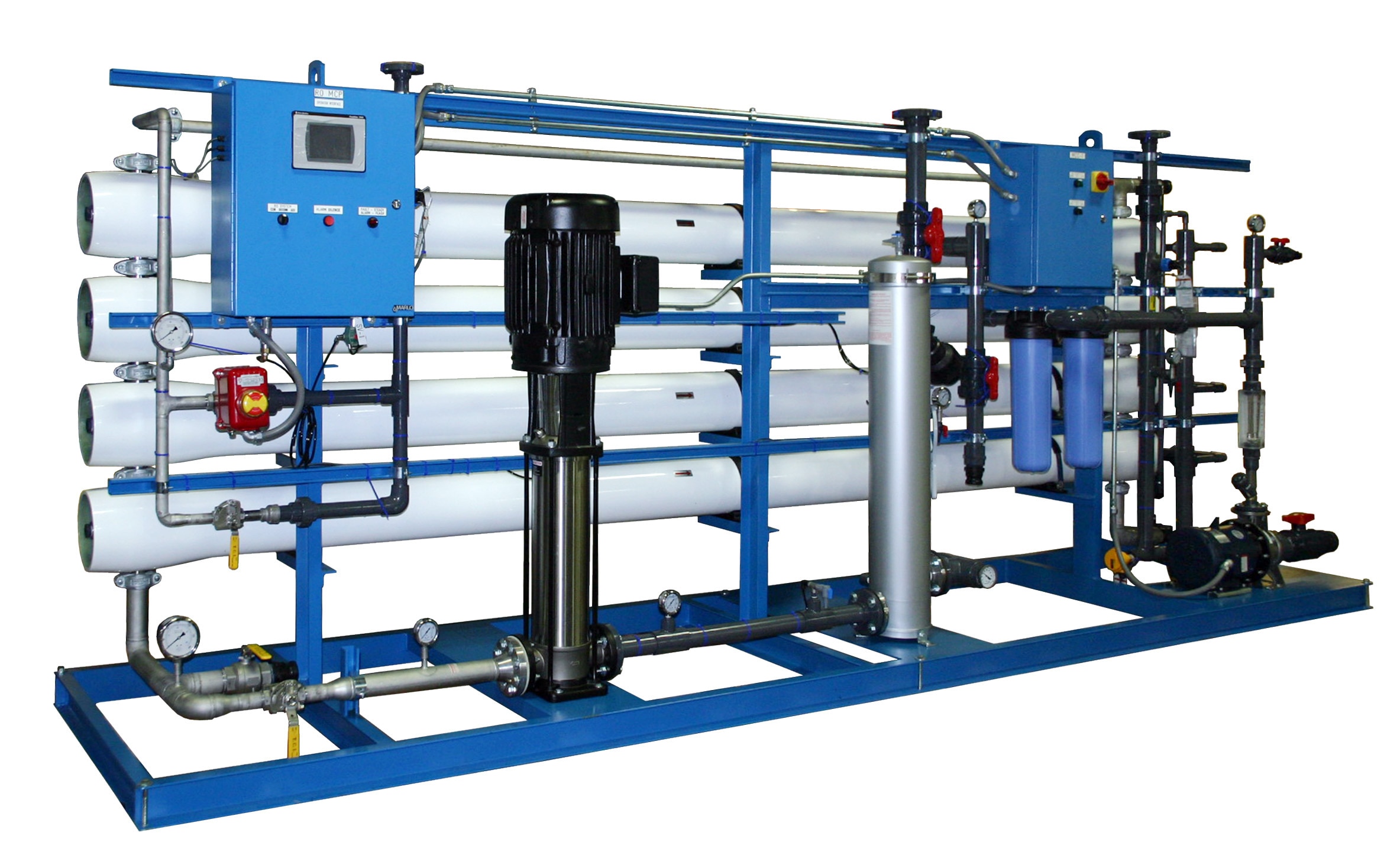 | at Neel Guard Aqua Systems Neel Guard Aqua Systems offers advanced Industrial RO Plants designed to provide reliable, efficient, and consistent water... View product → |
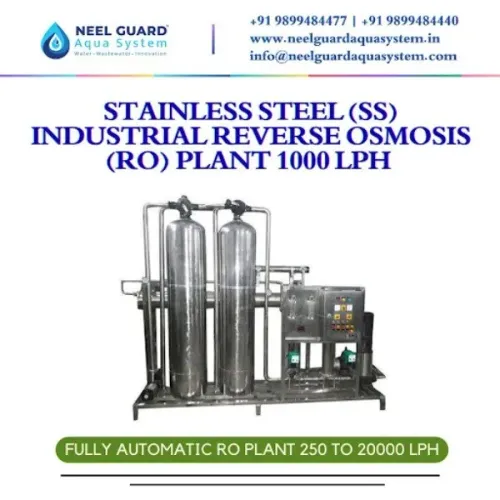
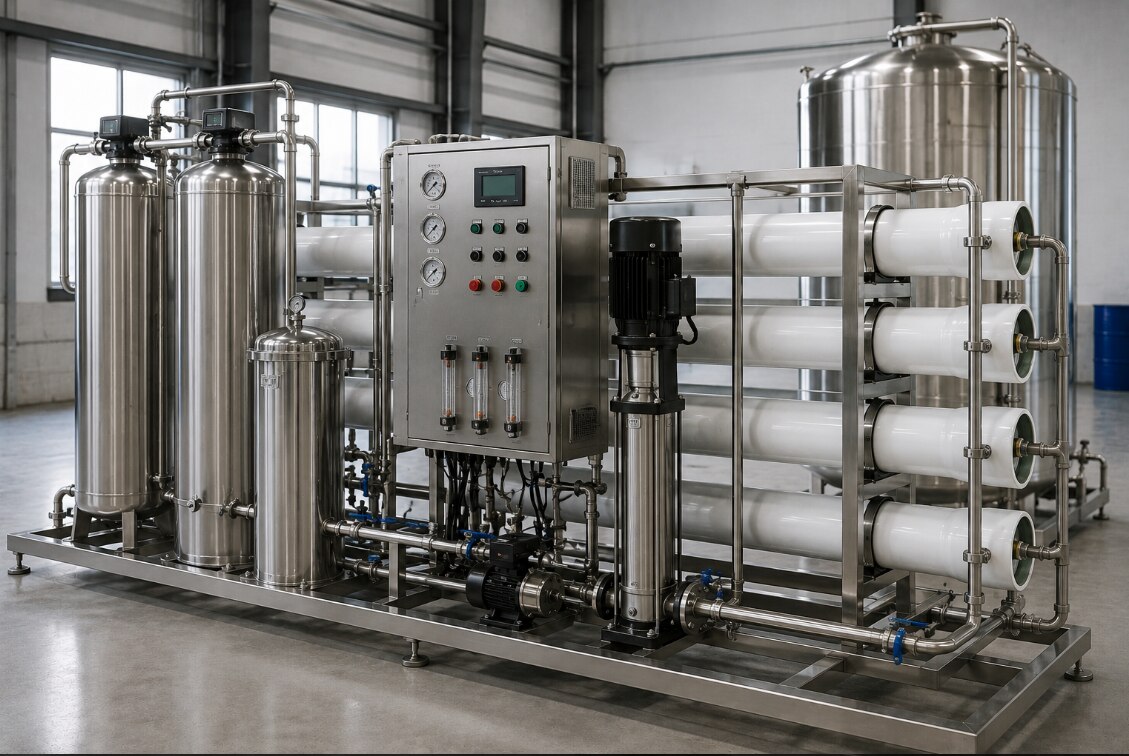 | STAINLESS STEEL INDUSTRIAL RO PLANT At Neel Guard Aqua Systems AI-Enabled SEO-Friendly Long Content for Website, Product Page & Digital Marketing Stainless Steel Industrial RO Plant... View product → |
Frequently asked questions
How do you calculate the firm capacity of an industrial RO plant?
List process, washing, boiler, cooling, laboratory and expansion demand. Separate average, maximum hourly and maximum shift demand, then include operating hours, batch timing and storage.
What feed-water tests are needed before choosing RO pretreatment?
Test the source for pH, temperature, turbidity, conductivity, total dissolved solids, hardness, alkalinity, silica, iron, manganese, chlorine and microbiological indicators.
What should a membrane projection report show?
Request feed flow, permeate flow, concentrate flow, recovery, temperature, pressure, salt passage, permeate quality, membrane count and fouling or scaling assumptions.
How do you match an RO treatment train to the required water specification?
Define the required conductivity, hardness, silica, microbiological quality and permitted chemicals first. Then select pretreatment, RO stages, polishing and disinfection to meet those limits.
Which controls, materials and vendor documents should you specify?
Specify automatic shutdowns, pressure and flow instruments, cleaning connections, compatible wetted materials, calibration records, membrane data sheets, drawings, testing procedures and commissioning evidence.
Related products
 | REVERSE OSMOSIS (RO) PLANTS ₹480000 Neel Guard Aqua Systems offers a high-capacity 5000 LPH Industrial Reverse Osmosis (RO) Plant, expertly engineered for industries and commercial... View product → |
 | REVERSE OSMOSIS (RO) PLANTS STAINLESS STEEL INDUSTRIAL RO PLANT 5000 LPH ₹890000 The SS Industrial RO Plant (5000 LPH) is engineered to treat high-TDS, brackish, and borewell water efficiently. View product → |
 | REVERSE OSMOSIS (RO) PLANTS ₹2150000 Neel Guard Aqua Systems offers a high-capacity 20,000 LPH Industrial Reverse Osmosis (RO) Plant, purpose-built for large-scale industrial and... View product → |
 | REVERSE OSMOSIS (RO) PLANTS ₹1440000 Neel Guard Aqua Systems presents a heavy-duty 15,000 LPH Industrial Reverse Osmosis (RO) Plant, engineered for very large industrial and commercial... View product → |