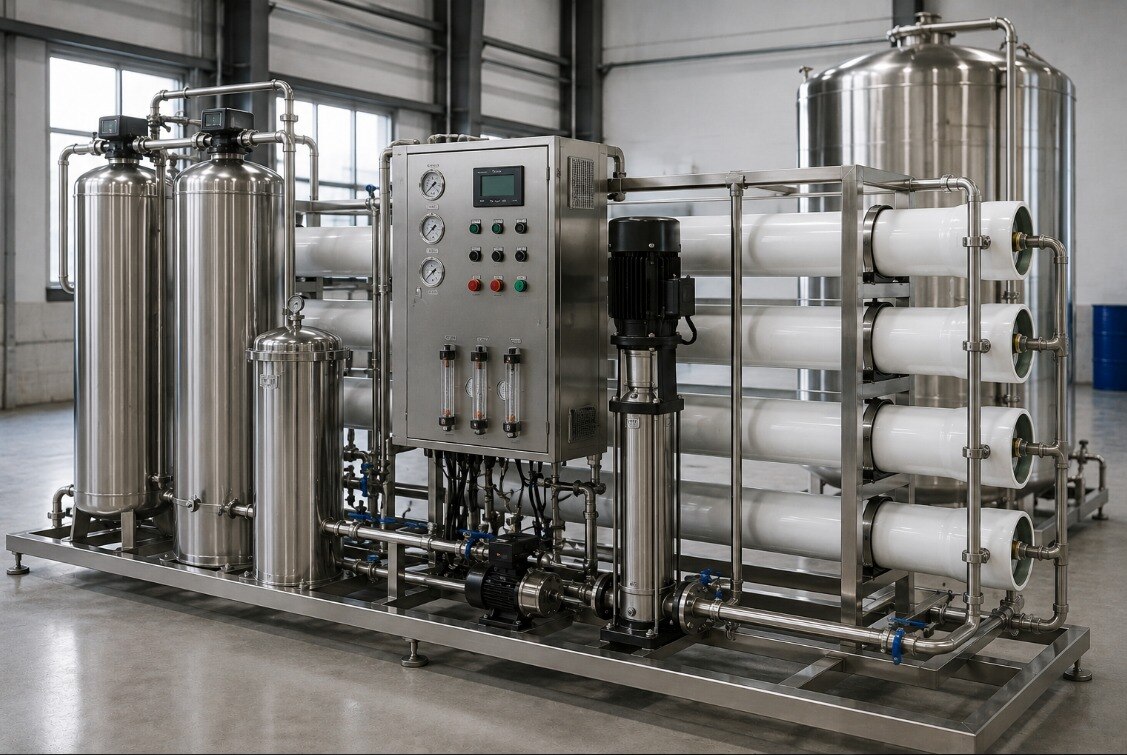
A stainless-steel skid is easier to clean and inspect than a poorly designed system, but the metal alone does not determine hygienic performance. By the end, you will be able to identify the wetted materials, fabrication details, operating controls and test records that justify choosing stainless steel for an RO plant.
Key takeaways
- Inspect every wetted component, not only the stainless steel frame.
- Specify smooth welds, hygienic fittings, drainage, and documented passivation.
- Use sealed tanks, protected vents, and recirculation to prevent post-treatment contamination.
- Compare material grades, surface finish, cleaning access, and control features before purchase.
How stainless steel supports hygienic water processing
Stainless steel provides a practical hygiene advantage because smooth non-porous surfaces do not absorb water and can be washed, rinsed, and inspected without retaining residue. In a stainless steel RO plant, correctly finished and passivated wetted pipework also resists rust and many cleaning chemicals, while rigid supports reduce movement, impact damage, and hidden leaks.
- Smooth internal surfaces reduce sites where biofilm and product residue can attach.
- Continuous, well-finished welds reduce crevices that shelter microorganisms and resist normal cleaning.
- Rigid, fully drainable pipework limits stagnant water after production, sanitisation, or shutdown.
The benefit depends on fabrication, not the word “stainless” on a quotation. Weld heat tint, rough grinding marks, embedded iron, scratches, dead legs, and liquid traps can undermine hygienic water processing even when the pipe is 316L.
Select 304 or 316/316L against chloride concentration, cleaning chemistry, temperature, and corrosion exposure; 316L is not automatically the right choice for every service.
Stainless steel also costs more and weighs more than polymeric skid construction. The premium makes practical sense when validated cleaning, long service life, reduced contamination risk, or high-value process water matters more than the lower installation cost of a polymer system.
ASME BPE can guide materials, finishes, joining, and drainable design in pharmaceutical or bioprocess service, but it is not a universal requirement for every industrial RO plant.
Check the complete wetted path, not just the frame
Evaluate every surface that touches feed, permeate, concentrate or cleaning solution. A stainless frame proves nothing if the wetted parts include unsuitable membrane housings, cartridge housings and gaskets, valve seats, hoses, sampling valves or instrument diaphragms.
| Comparison | SS 304 | SS 316L |
|---|---|---|
| Typical use | Lower-chloride feed and general plant service | Higher chloride exposure and demanding hygienic service |
| Main concern | Pitting in chloride-bearing water or cleaners | Better chloride resistance, but not immunity to attack |
| Selection check | Review water chemistry and cleaning agents | Review chloride, temperature, acids and hypochlorite together |
SS 304 versus SS 316L is only one material decision. Polyamide membrane elements, polypropylene or PVC components, elastomers and filter media also contact the water. Ask for the material grade, chemical compatibility and extractables information for every item in the flow path, including tank linings and flexible connections.
Use this acceptance checklist:
- Confirm that membrane housings and cartridge housings are compatible with pressure, temperature and cleaning chemicals.
- Check that gaskets, O-rings and valve seats have no swelling, cracking or exposed edges that trap soil.
- Verify that permeate-side metals suit low-conductivity water, which can be chemically aggressive, and check for mixed-metal galvanic couples.
- Request cleaning and passivation records referencing ASTM A380/A380M or ASTM A967/A967M.
Reject a system with stagnant branches, liquid traps or inaccessible sampling points even when its pipework is polished stainless steel. Hygienic qualification belongs to the complete drainable path, not the skid label.
Fabrication details that determine whether stainless steel stays hygienic
Reject a hygienic claim if you find heat tint, crevices or an undrainable branch. Stainless steel remains hygienic only when fabrication leaves smooth, cleanable, corrosion-resistant surfaces throughout the wetted path.
Before acceptance, use this inspection sequence:
1. Examine every weld, including internal bores with a light or videoscope. Orbital welding should produce a consistent circumferential bead without undercut, pinholes, cracks, sharp edges or dark oxide. Poor argon purging and excessive heat input leave heat tint that can retain contamination and reduce corrosion resistance. Request weld maps, purge records and inspection results.
2. Check surfaces for embedded iron, weld spatter, deep scratches, rough grinding marks and pits. Measure surface roughness against the purchase specification rather than accepting “polished” as a result. Confirm post-fabrication cleaning and passivation records: ASTM A380/A380M covers cleaning, descaling and passivation practice, while ASTM A967/A967M covers chemical passivation treatments and verification.
3. Trace the pipework from inlet to outlet. Reject stagnant branches, unnecessary dead legs, liquid traps and high points that cannot vent or drain. Confirm low-point drains, accessible cleaning connections and a continuous fall where drainability is required.
4. Open representative fittings and inspect gasket compression, alignment and valve-seat condition. Verify sanitary gaskets, sampling valves, hoses, cartridge housings and instrument diaphragms; each can create a microbial niche or add extractables despite sound stainless pipe.
5. Match the documented finish, weld procedure and passivation evidence to the actual installed system, not a sample spool. Be cautious of missing records.
Operating controls that prevent contamination after RO treatment
RO permeate is not sterile, and a clean stainless surface cannot correct poor operating control. Keep the entire wetted path free of stagnant water, protect the polyamide membranes from oxidants, and verify microbial performance after storage and cleaning.
- Pretreatment: Backwash and replace filters on a defined schedule, remove chlorine before the RO membranes, and prevent untreated water from sitting in idle branches. Sanitation of pretreatment vessels needs a documented chemical concentration, contact time and rinse check.
- Production: Maintain the designed crossflow and reject flow, inspect conductivity and pressure trends, and reject permeate during start-up until readings stabilise. Avoid dead legs, liquid traps and valve cavities that retain water.
- Storage: Use a closed, drainable tank with a protected vent and a recirculation loop. Keep the loop moving at the validated frequency, and add UV, ozone or another final microbial barrier when the water-use risk demands it.
- Shutdown: Follow the membrane supplier’s preservation procedure rather than leaving warm, stagnant water inside the plant. Drain low points, isolate contaminated pretreatment equipment and record the shutdown duration.
- Cleaning: Use a validated clean-in-place sequence for alkaline and acidic soils, confirm chemical compatibility with membranes, elastomers and instruments, then rinse until conductivity and pH meet release limits. Include membrane flushing after cleaning.
Schedule tank cleaning separately from pipework cleaning, because biofilm on a tank wall can reseed an otherwise clean distribution system. Record chemical strength, temperature, contact time, rinse results and post-cleaning microbial results for every sanitisation cycle.
How to compare a hygienic stainless-steel RO plant before purchase
Pay the stainless premium when contamination control, cleanability and service life matter more than the lowest purchase price. Compare the complete wetted path, not the frame: pipe, membrane housings, cartridge housings, valves, sampling points, instruments, gaskets and storage connections.
| Comparison point | Lower-cost option | Stainless hygienic case |
|---|---|---|
| Wetted materials | PVC, PP or mixed components with elastomer seals | Passivated 304 or 316L pipework, documented gasket and valve-seat materials |
| Water trend | Conductivity and TDS remain stable, with no microbial concern | Rising conductivity, TDS drift, repeated microbial counts or frequent sanitisation failures justify tighter control |
| Fabrication evidence | Generic weld and surface descriptions | Orbital-weld logs, purge records, borescope images, surface-finish readings, passivation records and drainability drawings |
| Supplier record | Equipment list and a commissioning sheet | RO water quality testing, trend charts, cleaning records, replacement history and references for comparable service |
| Applicable standard | General industrial construction | ASME BPE documentation when the installation serves pharmaceutical or bioprocess production |
Ask for at least six months of feedwater and product-water data before choosing 304 or 316L. Chloride concentration, cleaning temperature and chemical exposure decide whether 316L earns its cost; grade alone does not prevent crevices, heat tint or contaminated welds.
Require acceptance criteria for conductivity and TDS, microbial counts, recovery, rejection and leak testing. NEEL GUARD AQUA SYSTEMS should be asked to identify every non-stainless wetted component and provide its material, cleanability and replacement interval.
If the supplier cannot show traceable weld, passivation and test records, stainless steel is an expensive appearance rather than a verified hygienic design.
Related products
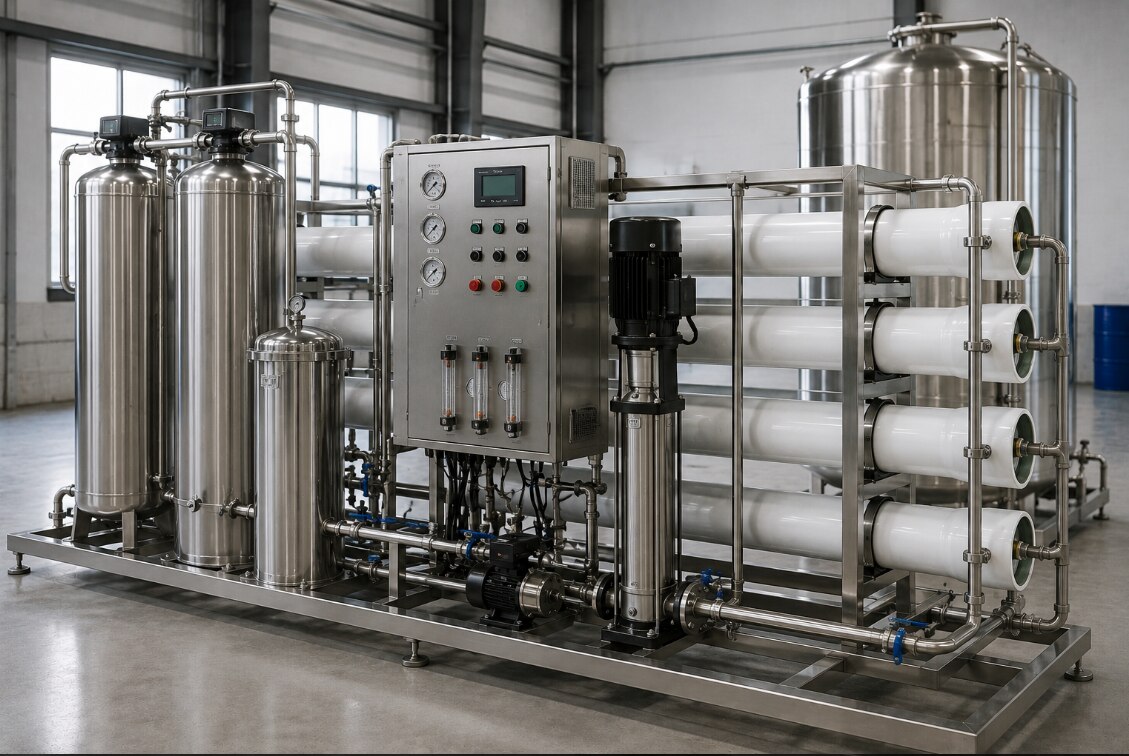 | STAINLESS STEEL INDUSTRIAL RO PLANT At Neel Guard Aqua Systems AI-Enabled SEO-Friendly Long Content for Website, Product Page & Digital Marketing Stainless Steel Industrial RO Plant... View product → |
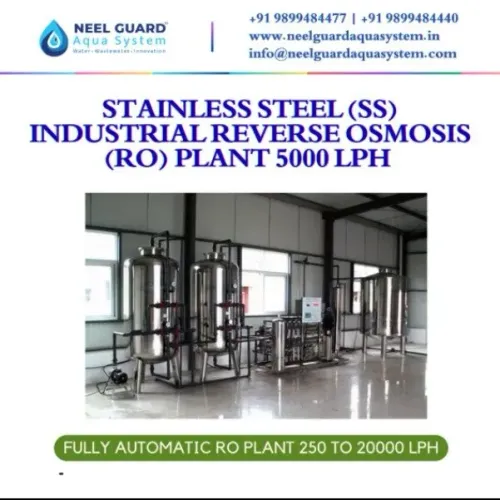
 | REVERSE OSMOSIS (RO) PLANTS STAINLESS STEEL INDUSTRIAL RO PLANT 5000 LPH ₹890000 The SS Industrial RO Plant (5000 LPH) is engineered to treat high-TDS, brackish, and borewell water efficiently. View product → |
Frequently asked questions
Why does stainless steel support hygienic water processing?
Its smooth, non-porous surface does not absorb water, allowing residue to be washed, rinsed, and inspected. Correctly finished and passivated stainless steel also resists rust and many cleaning chemicals.
Which parts of an RO plant must be checked for hygienic construction?
Check the complete wetted path, including feed and permeate pipework, membrane housings, valves, pumps, instruments, tank connections, gaskets, and sampling points. A stainless steel frame does not make non-stainless wetted components hygienic.
Which fabrication details affect stainless steel hygiene?
Look for smooth, fully penetrated welds, hygienic fittings, minimal crevices, sloped drainable pipework, suitable surface finishing, and documented passivation. These details reduce residue traps and corrosion risk.
How can contamination be prevented after RO treatment?
Protect permeate tanks with hygienic vents, keep access covers sealed, use sanitary overflow and drain arrangements, maintain recirculation where required, and monitor conductivity, flow, pressure, and tank conditions.
How should you compare hygienic stainless-steel RO plants?
Compare the full wetted-path material list, stainless-steel grade, surface finish, weld quality, passivation records, cleanability, drainage, instrumentation, controls, maintenance access, and post-treatment protection.
Related products
 | REVERSE OSMOSIS (RO) PLANTS STAINLESS STEEL INDUSTRIAL RO PLANT 1000 LPH ₹350000 Neel Guard Aqua Systems proudly presents the 1000 LPH Stainless Steel (SS) Industrial Reverse Osmosis (RO) Plant, designed for industries and... View product → |
 | REVERSE OSMOSIS (RO) PLANTS STAINLESS STEEL INDUSTRIAL RO PLANT 2000 LPH ₹475000 Neel Guard Aqua Systems proudly introduces the 2000 LPH Stainless Steel (SS) Industrial Reverse Osmosis (RO) Plant, engineered for industries and... View product → |
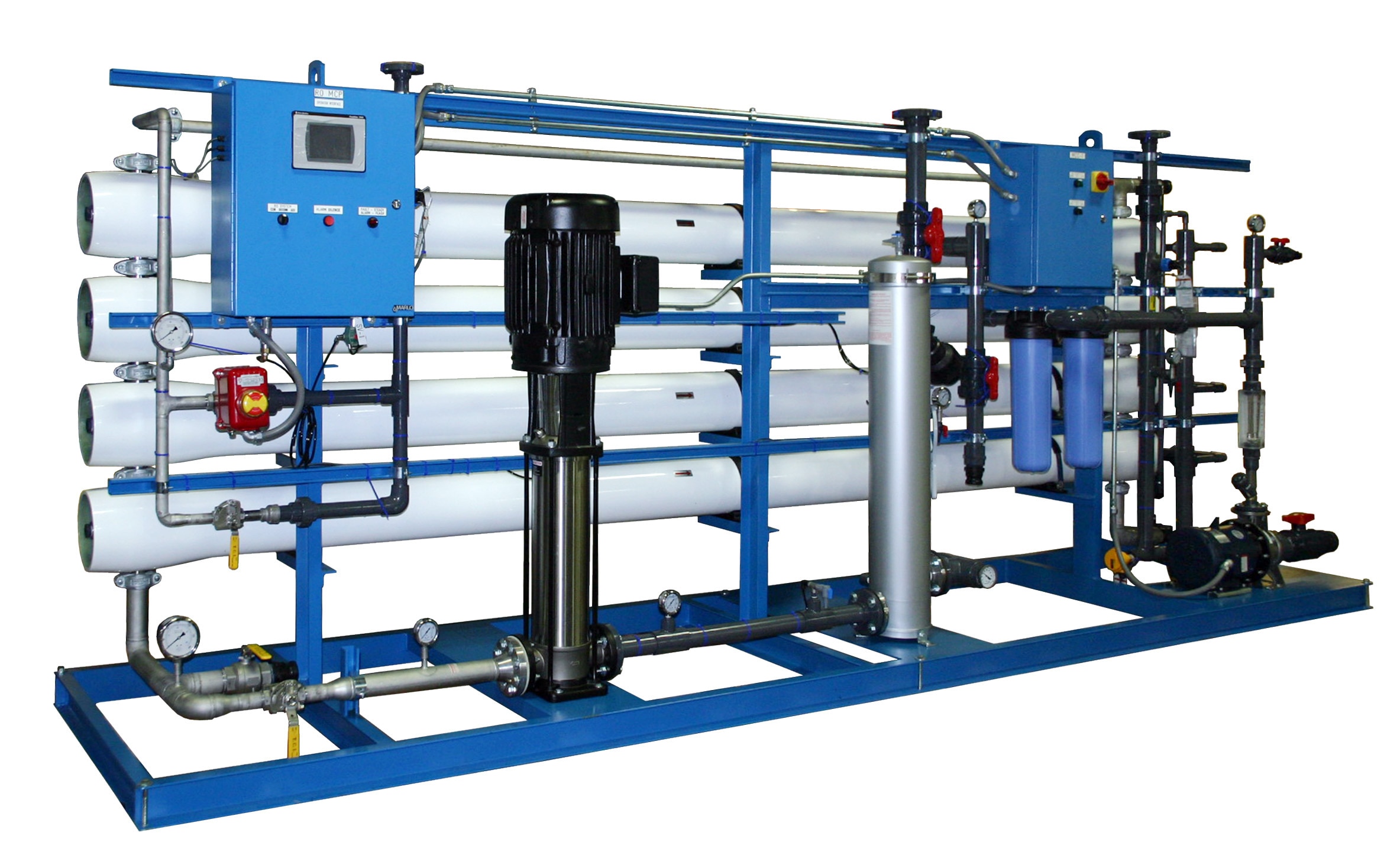 | at Neel Guard Aqua Systems Neel Guard Aqua Systems offers advanced Industrial RO Plants designed to provide reliable, efficient, and consistent water... View product → |
 | REVERSE OSMOSIS (RO) PLANTS ₹2150000 Neel Guard Aqua Systems offers a high-capacity 20,000 LPH Industrial Reverse Osmosis (RO) Plant, purpose-built for large-scale industrial and... View product → |