A 10 KLD rating describes an average daily hydraulic capacity, not a complete design for every building or reuse application. You will be able to test the sizing basis, compare treatment trains, define the evidence required at handover, and decide when a decentralized 10 KLD plant is the wrong choice.
Key takeaways
- Confirm measured daily flow, peak flow and future demand before choosing 10 KLD.
- Design equalization, access, drainage and sludge handling around the treatment train.
- Define influent limits and treated-water targets before comparing process technologies.
- Reject 10 KLD when peak flow, loads, space or operating capacity exceed the design basis.
How to Confirm That 10 KLD Matches the Site’s Actual Sewage
A 10 KLD plant fits only when measured sewage, pollutant load, peak hourly flow and future demand all fit its design basis—not because the site has a certain population. Its nominal capacity is 10,000 litres per day, or about 417 litres per hour averaged across 24 hours.
1. Record the site’s actual average flow for at least seven days. Use an inlet flow meter or measure tank filling volumes, and note water-supply readings, operating hours and discharge timing. Subtract irrigation, cooling and other non-sewage uses, then investigate infiltration if night-time flow continues after buildings are empty.
2. Complete an occupancy calculation. Multiply the maximum occupied population by the expected litres per person per day, then apply a sewage-return factor stated in the design, such as 80 percent.
For example, 60 residents using 135 litres per person per day at an 80 percent return rate generate 6,480 litres per day, leaving hydraulic allowance within 10 KLD.
3. Measure or test BOD, COD, TSS, pH and nitrogen. A BOD concentration of 250 mg/L at 10,000 litres per day creates a 2.5 kg BOD load; 100 mg/L creates 1.0 kg. The biological process must be selected for that load, not flow alone.
4. Capture the peak hourly flow during morning and evening surges. If it exceeds the treatment train’s intake rate, require equalization rather than assuming the daily average is safe.
5. Add approved future expansion: extra rooms, residents, staff or connected buildings. Obtain written limits for peak flow, BOD load, power, sludge removal and treated-water reuse before accepting the 10 KLD sizing.
Designing a Decentralized Treatment Site Around the Treatment Train
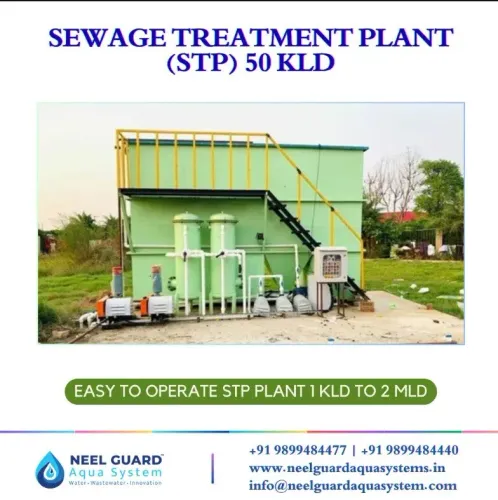
A compact 10 KLD decentralized wastewater treatment site needs a deliberate flow path, not merely a packaged tank placed beside a building.
Bring sewage to an inlet chamber with screening, followed by grit removal; retain wipes, sanitary products, hair, rags and plastics in a removable basket or mechanical screen, with a wash-down point for routine screenings removal.
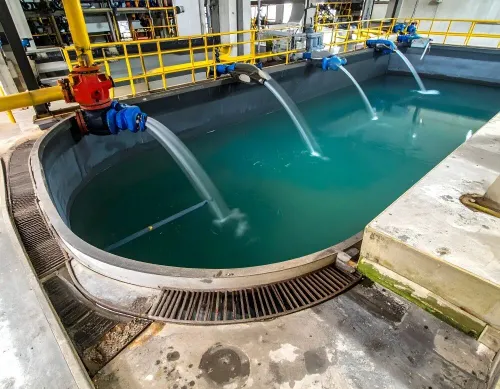
Route screened sewage into an equalization tank sized for the site’s low-flow hours and morning or evening surges. Pumps then feed the biological reactor at a controlled rate. Blowers need a dry, ventilated location with safe access, while instrumentation should monitor level, dissolved oxygen, pH and pump or blower alarms.
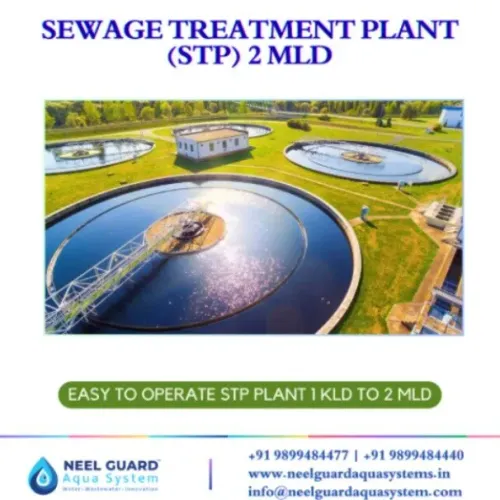
Send biological solids to a settling tank, or use membrane separation where the selected process requires it. Follow clarification or membrane separation with disinfection, such as ultraviolet treatment or chlorination, before directing water into a covered treated-water tank. Keep the outlet near the flushing, irrigation or cooling-water connection to avoid long stagnant pipe runs.
Reserve a separate, washable sludge storage area with tanker access. Waste activated sludge still needs periodic removal; without storage, excess solids can destabilise the biological reactor.
Place these features around four practical access routes:
- Keep the inlet, equalization tank and sludge storage enclosed or ventilated, because aeration will not cure odour from stagnant sewage.
- Provide lifting space for pumps, screens, membranes and blowers.
- Separate electrical controls and instrumentation from splash zones.
- Keep tanker, sampling and treated-water access clear of resident or customer walkways.
Choosing the Process Technology and Defining What Enters the Plant
Choose the process against actual failure risks, not the equipment label. A 10 KLD quote is credible only when it states average and peak flow, influent BOD, COD, TSS, ammonia, pH, temperature, nitrogen target, operating hours, power supply and treated-water use.
| Option | Flow variation and influent tolerance | Footprint, power and workload |
|---|---|---|
| MBBR | Handles load swings with attached biomass; equalization still protects it from shock loads | Compact; continuous aeration makes blower turndown, dissolved oxygen control and diffuser access important |
| SBR | Equalization helps batch cycles absorb uneven arrivals; poor timing causes underfilled or overloaded cycles | Smaller footprint; needs reliable controls, decanting equipment and an operator who understands alarms |
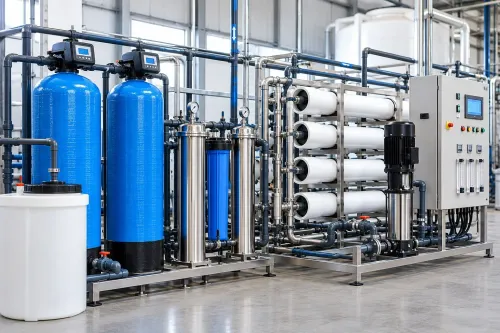
| MBR | Produces low-TSS permeate but needs fine screening and stable feed; oil and grease quickly worsens fouling | Smallest footprint; highest power and maintenance, including membrane cleaning and replacement |
| Activated sludge / extended aeration | Familiar and forgiving when loading is steady; variable flow changes oxygen and solids control | Larger tank and sludge workload; simpler equipment than MBR but continuous aeration |
| Anaerobic plus polishing | Useful for selected high-strength wastewater, not a complete domestic treatment solution | Lower aeration demand, but odour, gas and polishing stages add management |
Define the inlet before selecting biology. Separate kitchen grease and restaurant wastewater, control laundry chemicals, and enforce stormwater exclusion; a dilute rain surge or toxic detergent can upset any process. Use equalization for uneven occupancy, then specify blower turndown, standby philosophy and alarm response.
Ask for representative inlet samples covering flow, BOD, COD, TSS, oil and grease, ammonia and pH. Reject a design that lacks a performance test under peak loading and a stated sludge-removal interval.
Setting Treated-Water, Compliance, and Handover Requirements
Specify treated-water quality before you approve equipment. Write separate values for BOD, COD, TSS, pH, turbidity, faecal coliform, nitrogen, phosphorus, salinity and residual chemicals. A discharge limit is not a reuse specification: water accepted for toilet flushing, gardening or cooling makeup needs safeguards matched to that use, including chlorine residual or UV validation.
Tie every value to sampling points: inlet, post-treatment outlet, disinfection outlet and the final reuse tank. Require flow measurement, dose or chlorine residual monitoring, and online monitoring where the consent or reuse risk demands it. Do not accept a clear sample as proof of stable performance.
- Consent to Establish and Consent to Operate status from the Delhi Pollution Control Committee, with conditions checked against Central Pollution Control Board requirements.
- A signed performance guarantee covering flow, operating hours, inlet BOD/COD/TSS, outlet quality, power use and peak-load operation.
- A commissioning test using representative sewage over a defined operating period, with inlet and outlet tests for flow, pH, BOD, COD, TSS and relevant microbiological indicators from an approved laboratory.
- The operating log, calibration record, chemical-dosing records, alarm history and maintenance schedule.
- A marked drawing showing sampling points, bypass prevention, sludge disposal arrangements, excluded civil works and the reuse connection.
If NEEL GUARD AQUA SYSTEMS is quoting the plant, require these items in the purchase order rather than treating them as promises after installation. Reject handover until failed results are corrected and retested.
Related product
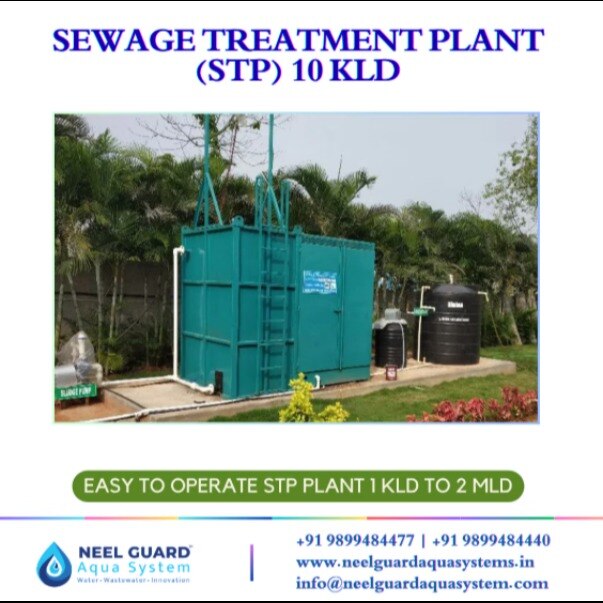
 | SEWAGE TREATMENT PLANT (STP) ₹400000 A 10 KLD (Kilo Liters per Day) Sewage Treatment Plant is a highly efficient wastewater treatment solution designed for medium-scale residential and... View product → |
Calculating the Real Operating Burden and Knowing When to Reject 10 KLD
A 10 KLD plant is a poor fit if nobody owns the daily work. Count operator hours for screen cleaning, pH checks, dissolved-oxygen checks, chlorine preparation, logbook entries and inspections; include electricity use, chemical consumption, spare parts and sludge wasting in the lifecycle budget.
Fine screens do not remove the need to clear wipes, rags, hair and plastics.
Aeration often dominates electricity use. Specify blower turndown, dissolved-oxygen control, diffuser access, noise limits and a standby blower; fixed over-aeration wastes power, while low oxygen causes ammonia and odour failures. Power cuts need a restart plan, not just a generator connection.
Reject the layout if maintenance access is too narrow for screen removal, membrane cleaning or sludge tanker connection. Check ventilation, odour control, mosquito prevention, flood level and groundwater before burying tanks. A stagnant septic tank, inlet chamber or sludge tank needs cleaning access and extracted air treatment; an aeration tank cannot cure upstream septic odours.
Use the alternative that matches the site:
- Choose greywater and blackwater separation when only toilet sewage needs treatment.
- Choose a septic tank and soak pit only where soil, groundwater, setback and local approval permit infiltration.
- Choose a sewer connection when reliable capacity exists and plant operation cannot be staffed.
Investigate failure symptoms—rising ammonia, dark sludge, foul odour, foaming, cloudy outlet, low airflow or frequent pump trips—before accepting handover. If sludge storage, lawful removal or operator cover is missing, reject 10 KLD.
Frequently asked questions
How do you confirm whether a 10 KLD sewage treatment plant matches site demand?
Compare measured daily sewage, pollutant load, peak hourly flow and future demand with the plant’s design basis. A 10 KLD plant handles 10,000 litres per day, averaging about 417 litres per hour across 24 hours.
What should a decentralized 10 KLD treatment site include?
Plan the site around the treatment train, including inlet screening, flow equalization, biological treatment, clarification or membrane separation, disinfection, sludge handling, safe access and treated-water storage or reuse.
What must you define before choosing sewage treatment technology?
Specify the incoming flow pattern, BOD, COD, suspended solids, oil and grease, pH, cleaning chemicals and other contaminants, then set treated-water quality, reuse, discharge and monitoring requirements.
When should you reject a 10 KLD sewage treatment plant?
Reject the size when measured or peak flow, pollutant loading, future demand, available space, sludge arrangements or the site’s operating resources exceed the proposed design basis.