Industrial wastewater can contain oil, solids, colour, metals, salts and biodegradable or toxic organic loads that require different treatment mechanisms. By the end, you will know how wastewater moves through an ETP, how to match treatment stages to test results, and how to check whether the plant is sized and controlled for actual discharge conditions.
Key takeaways
- Screen solids before pumps and biological treatment.
- Test flow, pH, COD, BOD, TSS and toxic contaminants before selecting processes.
- Size tanks and equipment for peak flow, not only daily average.
- Compare guarantees, sampling points, sludge handling and operating costs in every proposal.
What Happens to Wastewater Inside an ETP
1. The ETP process flow begins at a collection sump, where incoming effluent is gathered. Coarse screening removes rags, plastics and large solids; fine screening captures smaller debris that could block pumps or damage downstream equipment.
2. An equalisation tank balances changing flow and pollutant load before treatment. From there, a pH correction tank adds acid or caustic to bring the wastewater into the range required for chemical or biological treatment. Coagulation and flocculation then destabilise colloids and gather colour, metals and suspended solids into larger flocs.
Primary settling removes these chemically formed sludge particles, along with separated oil and grease.
3. Biological treatment uses microorganisms to reduce biodegradable BOD and COD; it will not reliably remove toxic, persistent COD or dissolved salts. Secondary clarification separates biological solids from the treated water, while filtration captures remaining fine particles.
Disinfection with ultraviolet light or chemicals provides the final microbial barrier: UV leaves no disinfectant residual, whereas chemical disinfectants can require dechlorination and create by-products.
This sequence combines physical, chemical and biological treatment. A metal-finishing factory may need all three, while a food plant may need screening, equalisation and biological treatment with limited chemical treatment. A low-solids cooling-water stream may need only selected units.
Choose stages from the wastewater’s flow, pH, temperature, BOD, COD, toxicity, metals, salinity and discharge target—not from a standard equipment package.
How Wastewater Testing Determines the Treatment Train
Choose the treatment train from measured wastewater, not from a nominal KLD label. Begin with a sampling plan: take representative samples from each major process stream and the combined influent during normal production, shift changes, cleaning cycles and batch discharges.
- Record pH, temperature and flow, including peak and batch flows.
- Analyse BOD and COD, TSS and TDS, oil and grease, chloride, sulphate and ammonia.
- Test heavy metals in effluent and industry-specific contaminants such as solvents, dyes, phenols or cyanide where relevant.
High COD does not prove biological treatability. The biodegradable fraction, toxicity, salinity, temperature and nutrient balance determine whether activated sludge or attached-growth treatment will work.
| Finding | Treatment implication | What can go wrong |
|---|---|---|
| High biodegradable load | Use activated sludge or attached-growth treatment after equalisation | Toxic shocks, salt or temperature changes can suppress biomass |
| Inhibitory process stream | Segregate the source before biological treatment | Mixing it with all influent can upset the entire reactor |
| Dissolved metals | Use chemical precipitation with controlled pH, oxidation state, reagent dose and settling | Poor control leaves metals in discharge and increases sludge |
| Persistent organics, colour or solvents | Apply oxidation or adsorption, with biological treatment only after inhibition is reduced | Refractory COD passes through the biological stage |
Source segregation keeps a concentrated problem from diluting into the whole plant. Confirm the final train with repeat sampling, biodegradability testing and jar tests; equipment selected without that evidence can be hydraulically adequate yet fail its discharge target.
How to Size the Plant for Real Operating Conditions
A 100 KLD label can still describe a plant that fails during one production batch. Average daily flow hides peak flow, short operating hours, washdowns and batch discharge, so an ETP capacity calculation must use the site’s real flow profile.
| Measure | What it reveals | Design consequence |
|---|---|---|
| Average daily flow | Total water generated per day | Baseline volume, not the whole design |
| Peak hourly flow | Fastest incoming rate | Size pumps, pipes and clarifiers |
| Operating hours | Whether discharge is continuous or intermittent | Account for idle periods and surges |
| Batch releases and washdowns | Sudden volume and pollutant loading | Provide equalisation or controlled release |
| Production expansion and future capacity | Expected increase in flow and load | Reserve space and equipment capacity |
Hydraulic capacity versus treatment capacity is the critical distinction. Hydraulic capacity means the water volume a plant can pass; treatment capacity means the pollutant mass, toxicity and shock load it can handle while meeting its design targets.
A plant rated for 100 KLD can fail when one short batch carries the day’s entire metal or solvent load.
An equalisation tank, mixer and controlled transfer pump dampen sudden changes in pH, temperature, solvent concentration, colour and pollutant load before biological treatment. Equalisation improves stability, but it requires more tank volume, pumping, mixing, odour control and maintenance. Size the tank from batch volume, washdown timing and contaminant concentration, not flow alone.
What Operators Control After the ETP Starts Running
Operators control treatment each day; they do not merely switch equipment on and wait. ETP chemical dosing includes acid or caustic for pH adjustment, coagulant and flocculant for solids removal, and nutrients for biological growth. Set dose rates from jar tests, wastewater analysis, oxygen demand, sludge behaviour and permit targets—not guesswork.
1. Adjust dissolved oxygen control to match biological oxygen demand, then set return activated sludge and waste activated sludge rates according to settling, biomass concentration and sludge age. Removing too little sludge causes solids accumulation; removing too much strips the reactor of organisms.
2. Treat nitrification as a separate control problem: ammonia oxidation consumes oxygen and alkalinity and responds poorly to toxic shocks, low temperature and low dissolved oxygen. Where total-nitrogen limits apply, provide an anoxic stage and an available carbon source for denitrification; carbon deficiency leaves nitrate in the effluent.
3. Inspect the clarifier for settling quality, sludge blanket depth, short-circuiting, rising sludge and filamentous bulking. A biological reactor can remove soluble organics while poorly settling filaments carry solids over the weir.
After clarification, control filtration and check online pH, flow, conductivity, dissolved oxygen, turbidity or ORP instruments. Pair readings with laboratory sampling, calibration and the legally specified monitoring point; an online reading alone does not prove compliance. Thicken, dewater, store and send sludge through a permitted disposal route.
How to Compare an ETP Proposal Before Discharge
Reject any proposal that gives only a KLD rating. Compare it against the legally specified monitoring point, permit limits and effluent discharge standards, not a salesperson’s inlet-outlet estimate.
Use this ETP selection checklist:
- Ask for the design basis: influent flow, pH, temperature, BOD, COD, TSS, TDS, metals and other pollutant concentrations.
- Check peak hourly flow, batch releases, washdowns and production-growth assumptions.
- Require each unit’s purpose, chemical consumption, sludge quantity, power demand and laboratory testing plan.
- Confirm automation limits, manual checks, calibration duties, maintenance access and spare-parts access.
- Require a written route for RO reject, filter backwash and hazardous or metal-bearing sludge.
| Option | Best fit | Main burden |
|---|---|---|
| Conventional discharge | A permitted receiving sewer or water body | Requires reliable treatment at the compliance point |
| Reuse with filtration or RO | Process water needs lower salts or contaminants | RO needs credible RO reject management |
| Zero liquid discharge | Liquid discharge is prohibited or water recovery is critical | Higher energy, chemical use and residue or crystallizer management |
Membranes concentrate salts, metals and organics; they do not destroy them. Choose zero liquid discharge only after confirming energy, chemical, evaporation and residue capacity.
NEEL GUARD AQUA SYSTEMS, a Delhi-based manufacturer and supplier, can use site wastewater data to develop a customized treatment train; you must still define testing, permits and operating responsibility in the contract.
Related products
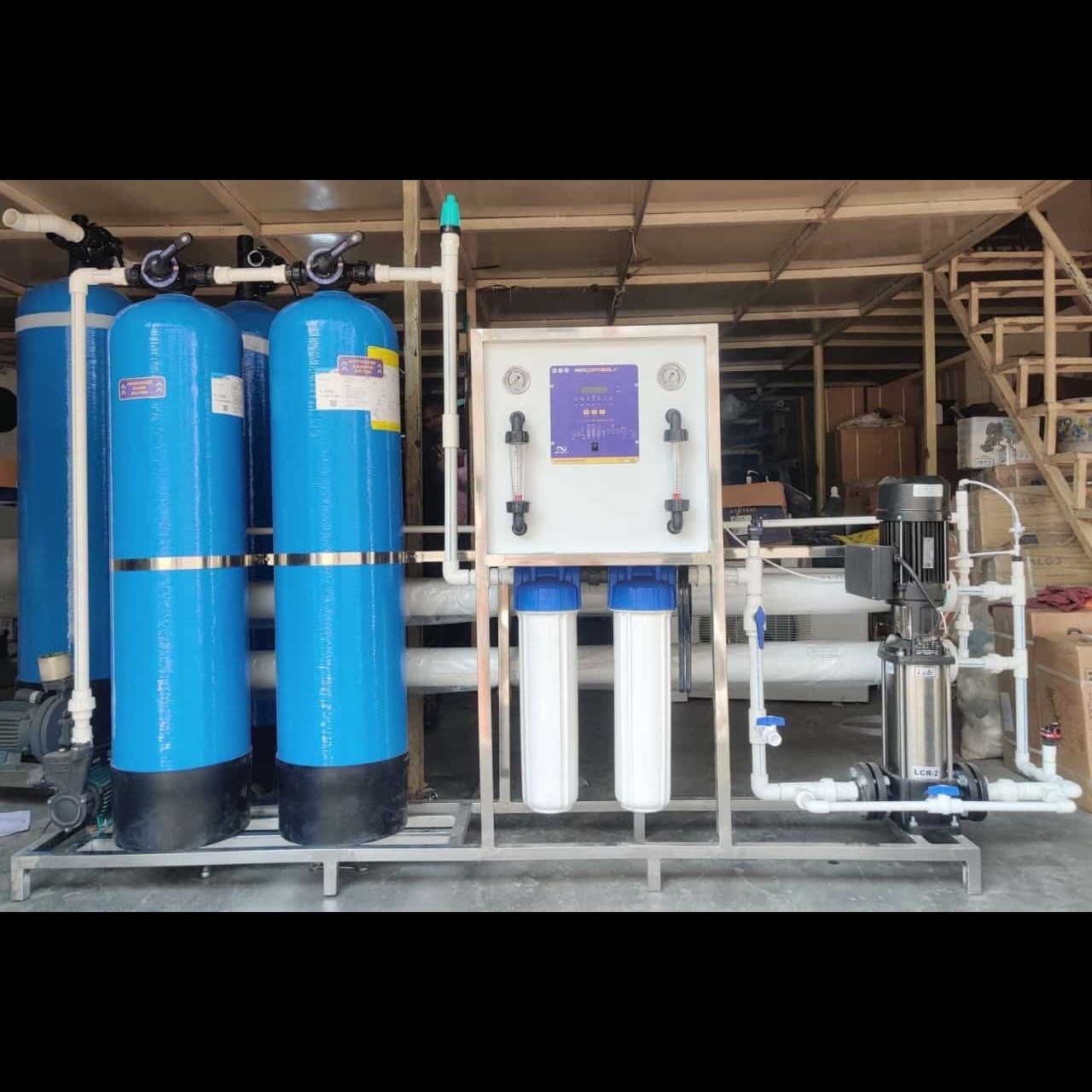 | at Neel Guard Aqua Systems Neel Guard Aqua Systems is engaged in providing advanced and customized Effluent Treatment Plant (ETP) solutions for... View product → |
 | EFFLUENT TREATMENT PLANT (ETP) EFFLUENT TREATMENT PLANT 500 KLD ₹5400000 A 500 KLD Effluent Treatment Plant is a robust and high-performance wastewater treatment system designed to treat up to 500,000 liters of industrial... View product → |
Frequently asked questions
What happens to wastewater inside an ETP?
Wastewater passes through collection, screening, equalisation and treatment stages before clarification, polishing and discharge or reuse. Sludge is separated for dewatering and disposal.
Which wastewater tests determine the ETP treatment train?
Flow, pH, temperature, BOD, COD, TSS, oil and grease, nutrients, salinity and toxic compounds reveal which physical, biological and chemical processes are required.
How do you size an ETP for real operating conditions?
Use measured average and peak flows, pollutant loads, production schedules, shock loads, hydraulic retention times and future capacity requirements rather than daily average flow alone.
What do operators control after an ETP starts running?
Operators track flow, pH, dissolved oxygen, sludge concentration, settling, chemical doses, return sludge and treated-water quality, then adjust the process from test results.
How should you compare an ETP proposal before discharge?
Compare the stated influent and effluent limits, treatment guarantees, design flows, sampling points, power and chemical use, sludge handling, maintenance access and lifecycle cost.
Related products
 | EFFLUENT TREATMENT PLANT (ETP) EFFLUENT TREATMENT PLANT 2 MLD ₹15000000 A 2 MLD (Million Liters per Day) Effluent Treatment Plant is a high-capacity wastewater treatment system designed to treat and purify industrial... View product → |
 | EFFLUENT TREATMENT PLANT (ETP) EFFLUENT TREATMENT PLANT 1 MLD ₹8500000 A 1 MLD (Million Liters per Day) Effluent Treatment Plant is a high-capacity wastewater treatment solution designed for industries to treat and... View product → |
 | EFFLUENT TREATMENT PLANT (ETP) EFFLUENT TREATMENT PLANT 5 KLD ₹250000 The 5 KLD Effluent Treatment Plant (ETP) by Neel Guard Aqua Systems is engineered to treat industrial wastewater with high efficiency. View product → |
 | EFFLUENT TREATMENT PLANT (ETP) EFFLUENT TRETMENT PLANT (ETP) 2 KLD ₹150000 The 2 KLD Effluent Treatment Plant (ETP) by Neel Guard Aqua Systems is engineered for small-scale industrial units requiring reliable and continuous... View product → |