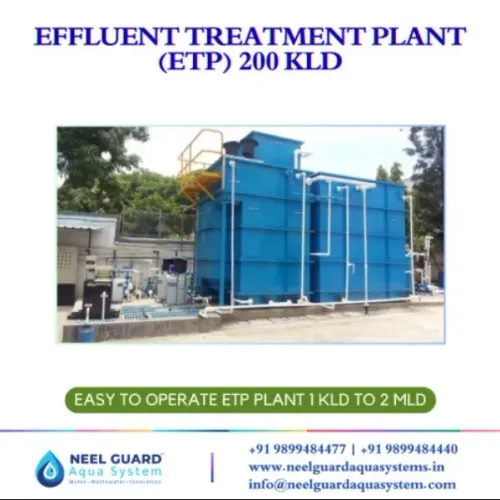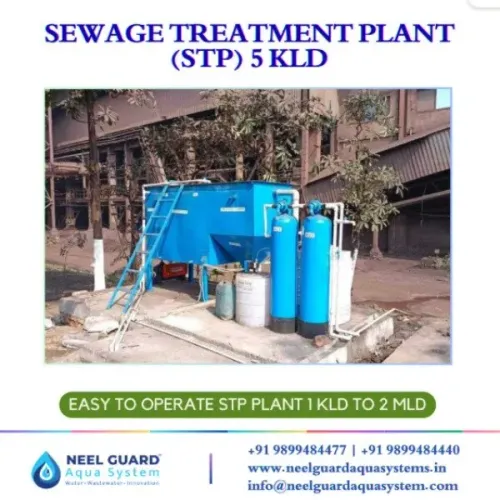
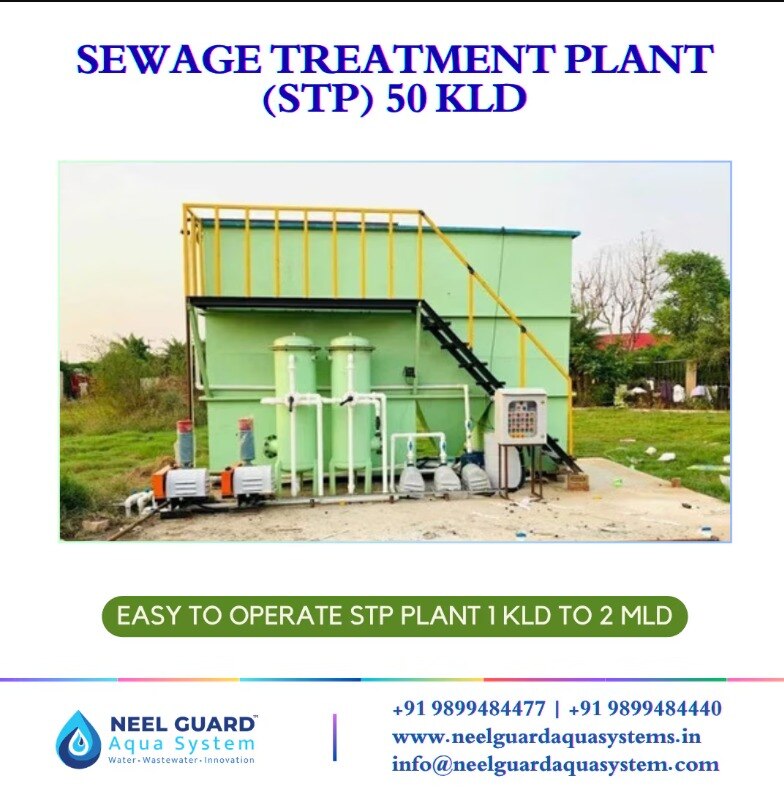
A 50 KLD sewage treatment plant is not simply a tank marked 50,000 litres: the inlet pattern, organic load, reuse target and maintenance access determine whether it performs reliably in a small space. By the end, you will be able to test the capacity, compare compact treatment configurations and prepare a site brief that accounts for surges, sludge, equipment access and treated-water quality.
Key takeaways
- 50 KLD equals 50,000 litres daily, not 2.08 m³ every hour.
- Measure peak flow before ordering; daily averages hide inlet surges.
- Choose MBBR, SBR, MBR or ASP from effluent and reuse requirements.
- Confirm sludge handling, maintenance access and standby equipment in the supplier scope.
What 50 KLD Means at the Inlet—and Whether Your Site Produces It
A 50 KLD sewage treatment plant is rated for 50,000 litres per day, or 50 m³/day. At a uniform 24-hour inlet, that equals 2.08 m³/h; it does not mean the site will deliver sewage at that rate every hour.
Calculate the expected sewage flow instead of copying the building’s stated capacity. Multiply the occupied population by actual water use per person per day, then add identifiable contributions from kitchens, laundries, staff facilities and process areas. Subtract water sent to irrigation, cooling, cleaning losses or other non-sewer uses.
Add a documented allowance for future occupancy, not an arbitrary percentage.
| Measure | How to calculate it | What it controls |
|---|---|---|
| Average daily flow versus peak hourly flow | Daily sewage volume ÷ 24; then identify the busiest hour from meter readings or occupancy patterns | Biological loading and inlet equipment |
| Peak hourly flow | Highest hourly inflow during morning, evening or shift change | Screens, pumps, pipes and overflow protection |
| Design flow | Average flow plus the selected expansion and peak-handling basis | Equalization volume and plant capacity |
A site producing 38,000 litres daily does not automatically need a 50 KLD STP; a site producing 50,000 litres in an eight-hour occupancy period receives about 6.25 m³/h during operation. Size screening, inlet pumping and equalization for that surge, not only 50/24.
Check organic load too: domestic sewage at 200–300 mg/L BOD₅ contributes about 10–15 kg BOD₅/day at 50 KLD. Canteen or laundry wastewater can change that load substantially. Capture flow and BOD samples before fixing the plant rating.
How Sewage Moves Through a Compact 50 KLD STP
A compact 50 KLD process still needs a complete treatment train. Inlet sewage first passes through physical protection, then flow balancing, biological treatment, solids separation, disinfection and storage; removing one stage shifts the problem downstream.
- Screening and grit removal catch rags, plastics, hair, sand and abrasive particles before they block pumps, foul diffusers or damage membranes. Add grease interception where kitchen wastewater enters the plant.
- The equalization tank absorbs morning and evening surges, prevents hydraulic shock to the biology and feeds a steadier flow forward. Size inlet pumps and screens for peak arrival, not only 50 m³/day divided by 24 hours.
- Biological treatment uses microorganisms to reduce dissolved and biodegradable organic matter. Maintain adequate aeration, mixing and sludge control, or high BOD and ammonia will pass through.
- Compare a secondary clarifier and MBR membrane separation for final solids removal. A clarifier settles activated sludge; an MBR uses membranes to retain fine solids and produce a clearer outlet, but requires protection from rags, grease and excess sludge.
- Disinfection with ultraviolet light, sodium hypochlorite or another specified method controls pathogens before reuse or discharge. Treated-water storage must hold the intended reuse demand without sending untreated overflow to drains.
- Sludge handling thickens, stores and removes biological solids safely; ignoring it eventually reduces tank volume and degrades effluent.
Install sampling points after screening, after biological or secondary treatment, and at the final treated-water outlet. Sampling only from a storage tank can hide intermittent solids carryover or dilution.
MBBR, SBR, MBR or Activated Sludge: Which Configuration Fits?
At 50 KLD, select the biological process by peak flow, organic load and available supervision—not by tank volume alone. The average is only 2.08 m³/h across 24 hours, but an eight-hour occupancy period produces about 6.25 m³/h before morning and evening surges are considered.
| Configuration | Footprint | Power | Operator attention and flow variation | Maintenance |
|---|---|---|---|---|
| MBBR STP | Compact biological tank; needs a clarifier or other solids separation | Moderate-to-high aeration demand | Robust against load swings when equalisation is provided; routine checks remain necessary | Clean media-retention screens; blocked screens can cause bypass or overflow, and waste sludge continuously |
| SBR sewage treatment plant | Compact because aeration and settling share a tank | Moderate-to-high, with timed aeration cycles | Handles variable flow with adequate buffer volume; cycle timing, decanting and alarms need active oversight | Maintain valves, decanter, probes and sludge wasting; missed cycles quickly affect discharge quality |
| MBR sewage treatment plant | Smallest process footprint because membranes replace final clarification | Highest, due to aeration and membrane scouring | Produces consistent solids-free effluent but needs close control of flux, fouling and peak inflow | Clean membranes, manage fine screening and replace modules as required |
| Conventional activated sludge | Largest footprint because it needs aeration and a settling tank | Moderate; depends on sludge age and oxygen transfer | Least forgiving of hydraulic surges and poor settling; requires experienced control | Monitor return and waste sludge, clarifier blankets and sludge carryover |
Require each quotation to state peak hydraulic capacity, BOD and ammonia loads, oxygen demand, sludge production and maintenance intervals. Hydraulic retention time cannot be compared from the 50 KLD label; temperature, influent strength, effluent target and sludge age determine the required volume.
Set the Influent Assumptions, Effluent Targets and Reuse Route Before Ordering
A 50 KLD process specification is incomplete until you define the incoming loads, the required effluent quality and where the treated water will go. The same flow from apartments, a hotel or a mixed commercial site can require different tanks, aeration and polishing.
1. Test and document the influent. For domestic sewage, use measured BOD and COD of domestic sewage, TSS and pH; 200–300 mg/L BOD represents roughly 10–15 kg BOD5 per day at 50 KLD. Record ammonia, oil and grease, conductivity and peak flow. Keep stormwater, cooling water and industrial chemicals out of the sewage line.
2. Identify abnormal contributors before sizing biology. A canteen adds grease, laundry adds surfactants and variable pH, and an industrial connection can add toxic compounds. Install grease removal or separate pretreatment where needed; do not dilute a difficult stream and call it domestic sewage.
3. Write the outlet target against its destination. Toilet flushing and irrigation need reliable solids and pathogen control; cooling make-up also brings salinity, hardness and scaling into the specification. Discharge to a sewer or surface water follows the receiving authority’s limits for BOD, COD, TSS, ammonia, nutrients, pH and residual disinfectant.
4. Specify ammonia nitrification when the reuse or discharge limit includes ammonia. Provide aerobic sludge age, dissolved oxygen, alkalinity, mixing and tank volume for the lowest operating temperature; hydraulic retention time cannot be selected from 50 KLD alone.
Require a solids-removal step before faecal coliform disinfection. UV loses performance with high TSS, while chlorine needs contact volume, dose control and residual monitoring. Pair the treatment train with a treated-water tank sized for the actual reuse schedule.
Plan the Real Footprint: Access, Sludge, Redundancy and Supplier Scope
A 50 KLD skid is not the site footprint. Reserve a maintenance aisle around tanks, a route for removing screens and pumps, space for electrical panels and blowers, chemical storage, wash-water connections, representative sampling points, and vehicle access for sludge removal. Include odour control and ventilation so enclosed areas do not become unsafe or unusable.
Sludge handling and dewatering is a daily operating provision, not an occasional service task. Allocate room for a sludge holding tank, filter press, screw press or drying area, plus sealed access for an authorised disposal vehicle.
Your STP footprint planning must also allow duty standby pumps and blowers; a single failed unit can stop aeration or cause a bypass.
Ask the supplier to document:
- A general-arrangement drawing showing equipment dimensions, access clearances, panel locations, pipe routes and vehicle approach.
- Average, peak-hour and design hydraulic flows, including equalisation volume and overflow protection.
- Duty and standby capacities, automatic changeover logic, alarm signals and spare-parts scope.
- Daily sludge quantity, wasting frequency, expected solids concentration and the specified dewatering method.
- Sampling points at screened influent, biological or secondary outlet, and final treated-water outlet.
- Blower noise, electrical load, ventilation rate, odour-control equipment and chemical-storage requirements.
- Civil loads, foundation details, excluded works, commissioning tests, operator training and maintenance responsibilities.
Whether you appoint NEEL GUARD AQUA SYSTEMS or another supplier, make these exclusions visible in the quotation. A low equipment price can become an expensive civil and operating problem.
Frequently asked questions
What does 50 KLD mean for a sewage treatment plant?
50 KLD means the plant is rated to treat 50,000 litres, or 50 m³, of sewage per day. A uniform 24-hour flow would equal 2.08 m³/h, but actual inlet flow varies with occupancy and water use.
How does sewage move through a compact 50 KLD STP?
Sewage typically passes through screening and grit removal, equalisation, biological treatment, clarification or membrane separation, disinfection and treated-water storage. Sludge is removed through a separate handling line.
Which is better for a 50 KLD plant: MBBR, SBR, MBR or activated sludge?
MBBR suits compact biological treatment with simpler operation; SBR treats flow in timed batches; MBR produces high-quality treated water in a small footprint; activated sludge needs more space and process control. Select from influent variation, effluent targets, reuse route and operator capability.
What should you define before ordering a 50 KLD STP?
Set the average and peak sewage flow, BOD, COD, TSS, oil and grease assumptions, discharge or reuse targets, daily operating hours and the destination for treated water. These inputs determine process sizing and equipment.
What space does a compact 50 KLD sewage treatment plant need?
Plan for process equipment plus inlet access, maintenance clearances, electrical controls, sludge storage or dewatering, treated-water storage, ventilation and safe movement of operators. Ask the supplier for a dimensioned layout showing every service access point.