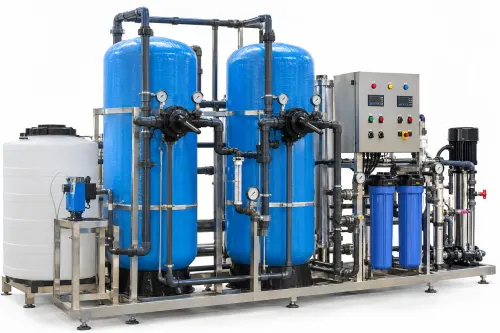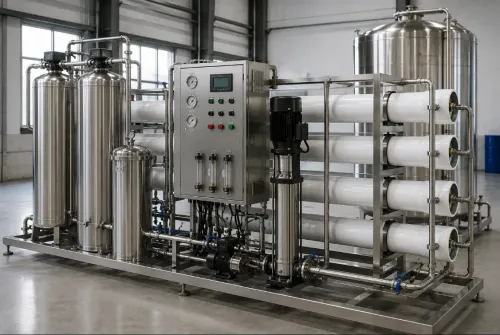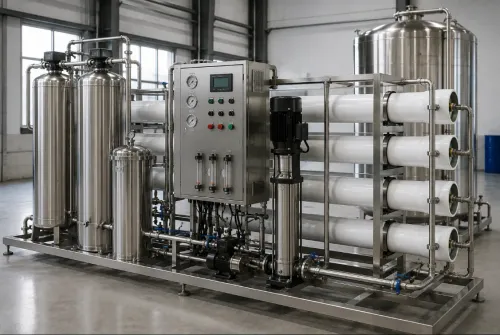
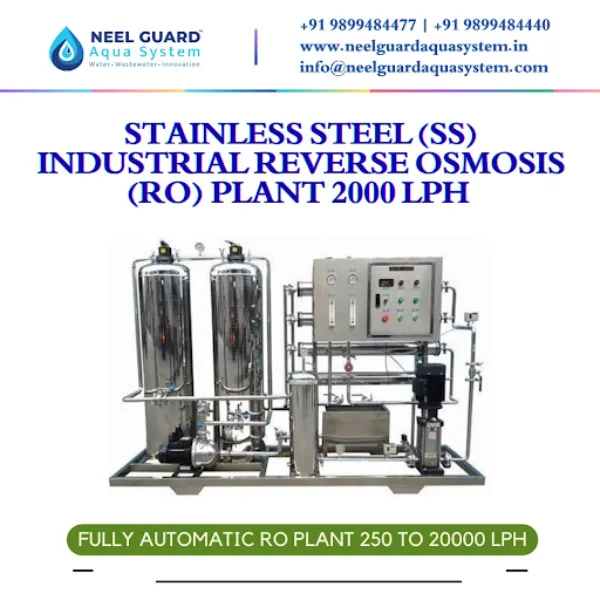
Selecting a Stainless Steel Industrial RO Plant 2000 LPH involves more than matching the number 2000 to hourly water demand. Industrial RO performance depends on raw-water quality, required permeate characteristics, operating hours, recovery expectations, pretreatment, component selection, and maintenance planning.
For procurement teams and plant operators in Delhi, asking the right questions before purchase can improve system suitability.
Start With Raw-Water Analysis
RO systems separate dissolved salts and other contaminants through membrane technology. Feed-water conditions influence membrane selection, pressure requirements, recovery, pretreatment, and cleaning frequency.
Important parameters may include:
- TDS
- Hardness
- pH
- Iron
- Silica
- Turbidity
- Chlorine
- Microbiological conditions where relevant
Additional parameters may be necessary for particular industrial applications.
Calculate Daily Water Requirement
A 2000 LPH plant theoretically produces approximately 2,000 litres per operating hour under its specified design conditions.
However, facilities should calculate how many hours the RO needs to operate and whether storage is required to manage periods of high demand.
Hourly production capacity should therefore be considered alongside total daily consumption.
Evaluate Stainless Steel Construction
Buyers frequently request stainless steel for durability, hygiene, appearance, or application-specific reasons.
Ask which components are stainless steel and what grade is proposed. A description such as “SS RO plant” should not replace a detailed material specification.
Compare Complete Specifications
When evaluating proposals, compare:
- Pretreatment equipment
- Membrane configuration
- High-pressure pump specifications
- Instrumentation
- Control panel
- Flow monitoring
- Pressure monitoring
- Piping and skid materials
- Cleaning provisions
- Installation scope
This creates a much more meaningful comparison than comparing equipment prices alone.
Account for Reject Water
RO produces permeate and a concentrated reject stream.
The expected recovery ratio should be discussed during design so that the facility understands feed-water consumption and reject-water quantity. Appropriate reject management depends on water chemistry, site requirements, and applicable conditions.
Neel Guard Aqua System provides industrial water treatment systems for businesses across Delhi. A properly configured Stainless Steel Industrial RO Plant 2000 LPH should reflect actual feed-water conditions and process-water requirements rather than relying on a standardised configuration.
Businesses planning a 2000 LPH installation can discuss raw-water analysis, operating requirements, available space, and desired output quality with the company before finalising the system.
Keywords